
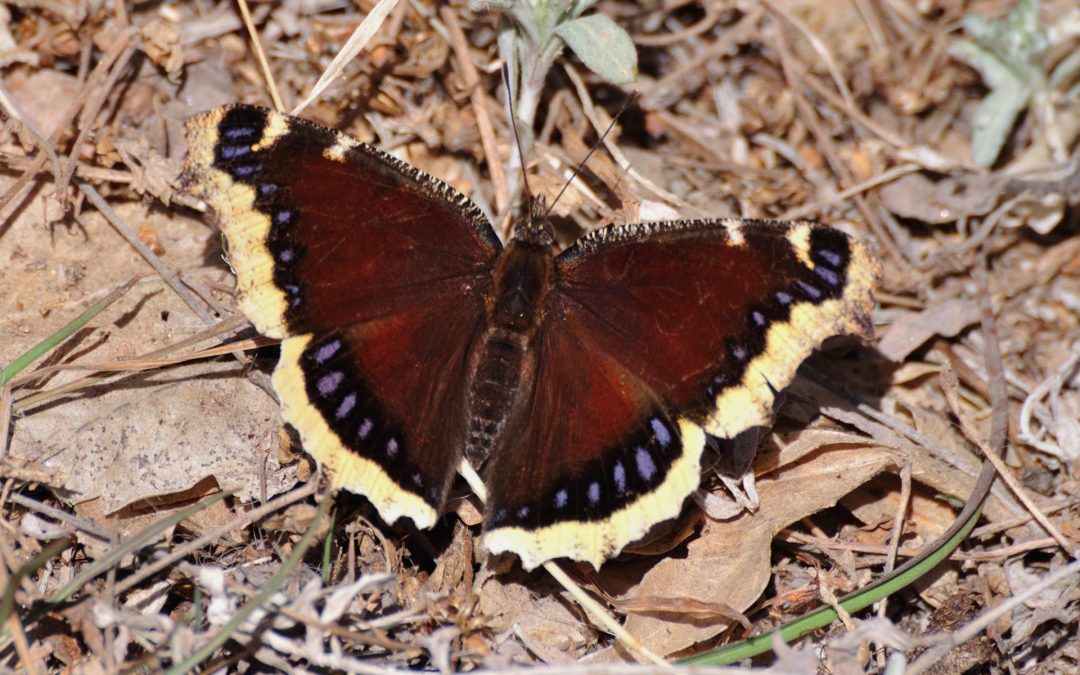
Mourning Cloak butterfly | Photo by Joe Shelling
A standard feature of our driveway for years was a Mourning Cloak butterfly. Then, about four years ago, it disappeared. Yesterday a Mourning Cloak appeared after its winter rest to resume the old post in the sandy part of the driveway. That return inspired me to think about pollinators, flowers and rainwater.
It has been a hard few decades for pollinators (bees, wasps, butterflies, moths, flies and hummingbirds) with climate changes, drought, pesticide and herbicide use and habitat loss. While the first three are mostly out of our hands, habitat is where we can make a contribution. How? Plant flowers, trees and shrubs for our pollinator friends. And who are these pollinator friends? In New Mexico we have 1,000 species of bees, 300 species of butterflies, 290 species of moths, hundreds of species of wasps, flies and ants and up to half a dozen species of hummingbirds and even bats. What does pollinator mean? All these creatures are in search of one precious substance, nectar. In the process of collecting nectar from flowers, they are dusted with pollen, which they then carry to the next flower, completing pollination.
I’m sure that you know many of the more familiar species: Monarchs, Swallowtails, Mourning Cloaks, Buckeyes. We all recognize Honeybees, Paper Wasps and Tarantula Wasps – yes, they eat nectar which gives them the energy to catch spiders. Moths are less well known because many of them are nocturnal. Perhaps the best known is the Sphinx Moth, which acts just like a hummingbird, but at night.
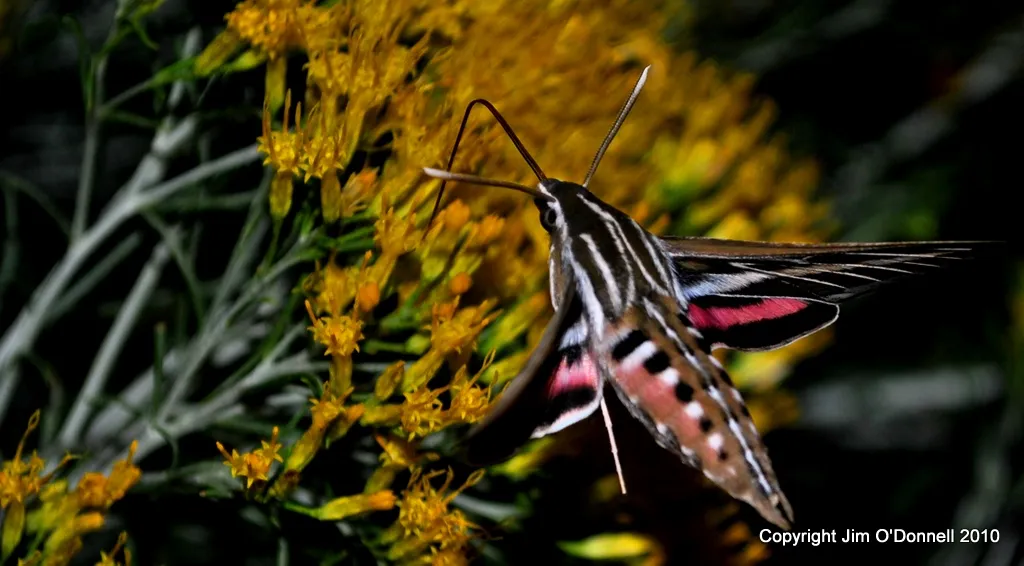
Sphinx Moth on Chamisa | Photo by Jim O’Donnell
Flies, again, are less familiar but very common. The Hover Fly acts like a very fast agile helicopter around flowers. Hummingbirds are counted as pollinators because of their attraction to flowering plants. They are much less effective pollinators because of their long beak; they often don’t even touch the flower! I did mention bats. They are attracted to agaves in bloom and help pollinate them.

A Lesser Long-nosed Bat feeding on an Agave blossom at night in Tucson, Arizona. | Photo from Environmental Defense Fund
We know that pollinators are attracted by flowers but what flowers are the best for pollinators? The species of flower makes little difference in most cases. However, roses, peonies, irises, tulips and other highly human-developed flowers either have little nectar or are too complex for the pollinators to reach the prize. My favorites are: Beargrass (Nolina), New Mexico Olive, Maximillian sunflower, barrel and hedgehog (claret cup) cacti, Blanket Flower, milkweeds and Desert Willow. These produce large amounts of pollen and/or nectar and often serve as food once their flowering duties are done. However, not everyone has space for trees and shrubs and would rather have flowers.
Here are several suggestions for creating a pollinator space: use native plants, look for a variety of species so that you have flowers from March to November, and mix some native grasses with the flowers. Also, look for perennials that will grow and expand in the same place every year. Nurseries and seed catalogs are filled with natives and native hybrids. At Bosque del Apache, we look for plants that are native to New Mexico, Socorro County and even the refuge. The following are the plants best adapted to our climate and soil: asters, mallows, zinnias, coreopsis, prairie clovers, poppies, penstemon, gaillardia and Rocky Mountain Bee Plant. Native grass species are blue and sideoats grama, Indian Rice grass and Sand Dropseed. And don’t forget to set out a parsley plant for the Black Swallowtails. Don’t worry; they will find it!
The third element of a successful pollinator garden is water. Most city dwellers’ only choice will be municipal water. It’s convenient but rather expensive and does contain traces of chlorine. Country dwellers often have an irrigation well. The water is also convenient and cheap, but carries a heavy mineral load, especially sodium. Plants need a wee bit of sodium but not as much as is in our ground water. Rainwater is our best choice. All you need is a bucket, barrel or tub positioned under one of the downspouts on your house. If you like using rainwater, consider investing in collection equipment, like that which has been installed in the Desert Arboretum at the refuge.
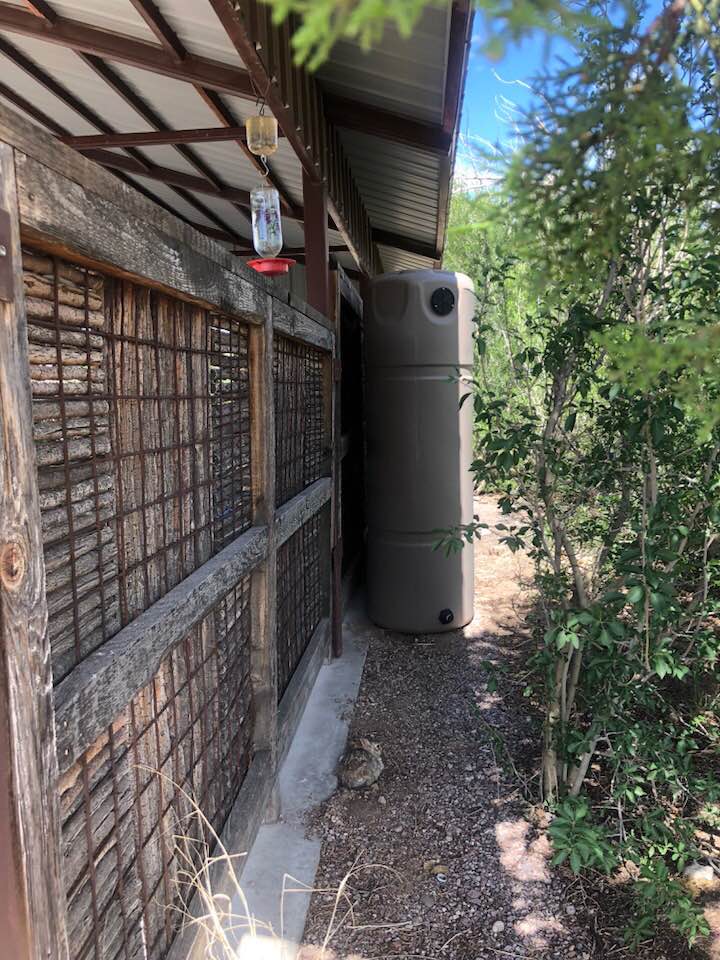
500-gallon slimline water tank, purchased and installed at the BdA Desert Arboretum by Friends of Bosque del Apache.
The rule of thumb for rainwater collection is one inch of rain on one square foot of collection area (roof) yields 0.6 gallons of water. To put it another way, an average-sized house in Socorro has a roof area of about 2,000 sq. ft. One inch of rain on that roof will yield 1,200 gallons of water. That’s a lot of water – buy a big bucket!
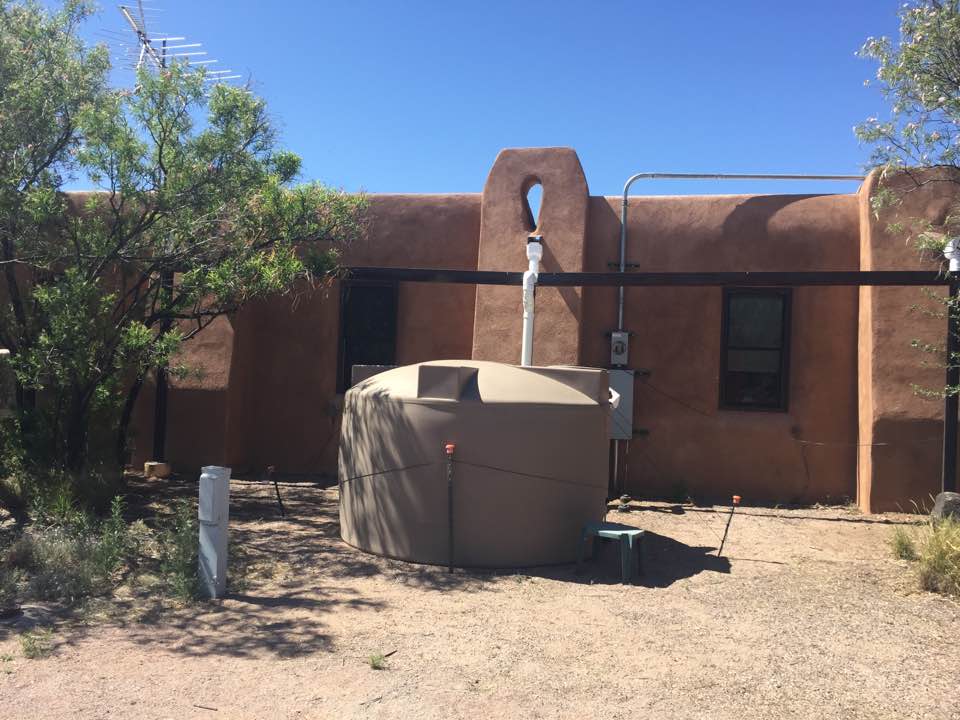
1,500 gallon water catchment tank, purchased and installed at the BdA Desert Arboretum by Friends of Bosque del Apache.
Lastly, watch this newsletter for updates on the progress of the Pollinator Habitat Enhancement Project at Bosque del Apache. Volunteers planted shrubs and trees last fall and wildflowers, grasses and milkweed this spring. If you would like more information on upcoming projects and volunteer opportunities at the Pollinator Habitat site, please email arboretum@friendsofbosquedelapache.org.