
By Claire Revekant, Senior Wildlife Biologist, Bosque del Apache National Wildlife Refuge
Bosque del Apache National Wildlife Refuge (hereafter; refuge) was established in 1939 to provide a critical stopover site for migrating waterfowl and for use as an inviolate sanctuary, or for any other management purpose, for migratory birds. Throughout the years, the landscape, climate, and ecosystem have undergone changes that impact how natural resources are managed in the Middle Rio Grande Valley of New Mexico. Wildlife, plants, and their habitats have had to adapt to these changes, and like mother nature, the refuge has adapted, too. Even so, one thing has stayed the same, the refuge still manages wintering grounds for waterfowl. So how do we do this? And what is moist-soil management?
First, imagine a wild Rio Grande moving through the landscape that is now called Bosque del Apache. The flows of winter, spring, and late summer with snow melt and monsoons, the ebbs of high dry summer. Today, the landscape historically touched by the workings of the Rio Grande is cut off from those natural flows. But taking pages from the Rio Grande book, the refuge now works to replicate those same seasonal ebbs and flows using heavy equipment, fire, water control structures, and the dedication and time of staff, interns, and volunteers. The job is complex and the nature of the work is demanding.
Moist-soil management is a wetland management technique. On the refuge, the goal is to provide a diverse diet of plant and animal food sources that are critical for wintering and migrating waterfowl, including ducks, geese, and cranes. With careful thought and strategy, a variety of seeds, plant parts, and invertebrates are grown in man-made impoundments (or units) and require well-timed management actions, including drawdown, flood up, and disturbance.
Drawdown/drawing down: the slow process of taking water off a unit to expose mud flats and encourage plants to germinate.
Flood up/flooding up: the slow process of putting water on a unit to encourage waterfowl to utilize an area and feed.
Disturbance/disturb: the practice of using heavy machinery to overturn the soil and bring the seeds that are deeper down in the seed bank closer to the top of the soil. Disturbing a unit ideally occurs on a 3–5-year cycle and the goal is to reset the vegetative community and increase seed production.
Although science directed, moist-soil management is often referred to as more of an art than a science. At the refuge, this requires intensive year-round planning, monitoring, and adjustments as staff and volunteers work daily to emulate the natural processes of the Rio Grande River. There is no easy formula for success beyond developing plans, monitoring frequently, and keeping a detailed record of management actions, natural conditions, and plant and wildlife responses. The management of moist-soil follows and changes with the seasons.
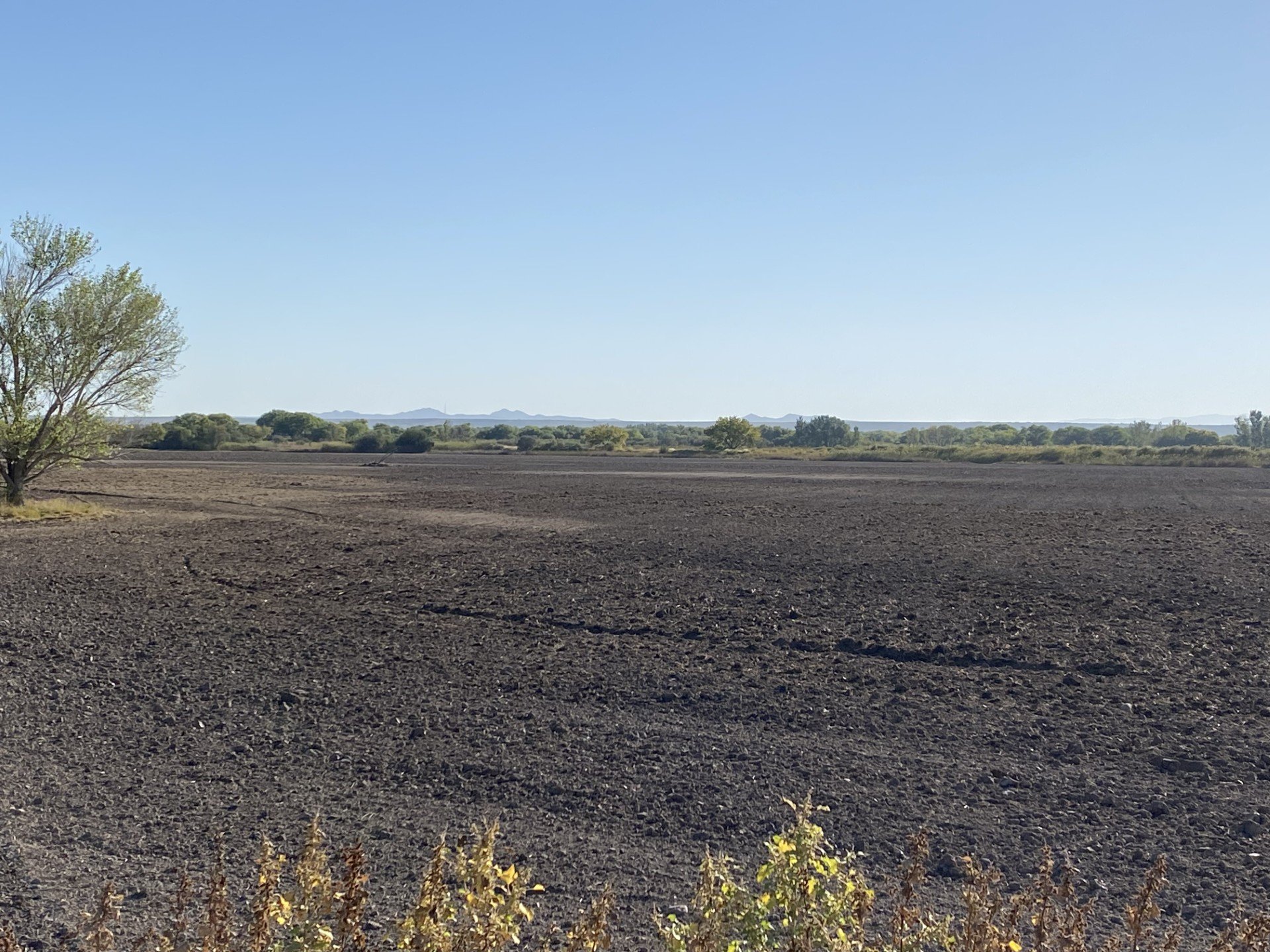
Disturbance at the Flight Deck unit occurred late summer/early fall 2024. Photo: Josh Lawhorn/USFWS.
In fall, the refuge is busy mowing and flooding up moist-soil units to make food and habitat available for migrating waterfowl. You might observe the seeds from this year’s growing season floating atop the water or collected on the water’s edge. Mowing helps open the unit to make it easier for waterfowl to see water and feeding opportunities during flood up and as a result, encourages them to land. Some units are left with standing vegetation to provide wind shelter for ducks and places for invertebrates to grow and floating seeds to collect. Once flooded, some units have areas of deeper water and shallower water, supporting a diversity of dabbling and diving ducks and other waterfowl (like the Dabbler & Diver Deck unit). Some areas are left flooded for the entire winter to be used as roost sites, while others are left to draw down after the waterfowl have eaten all the food. We try to ensure the water on the landscape is being used efficiently and effectively. On occasion, the refuge will disturb moist-soil units in the fall, such as what occurred at the Flight Deck this year. This generally occurs when a spring or summer disturbance is not able to be achieved.
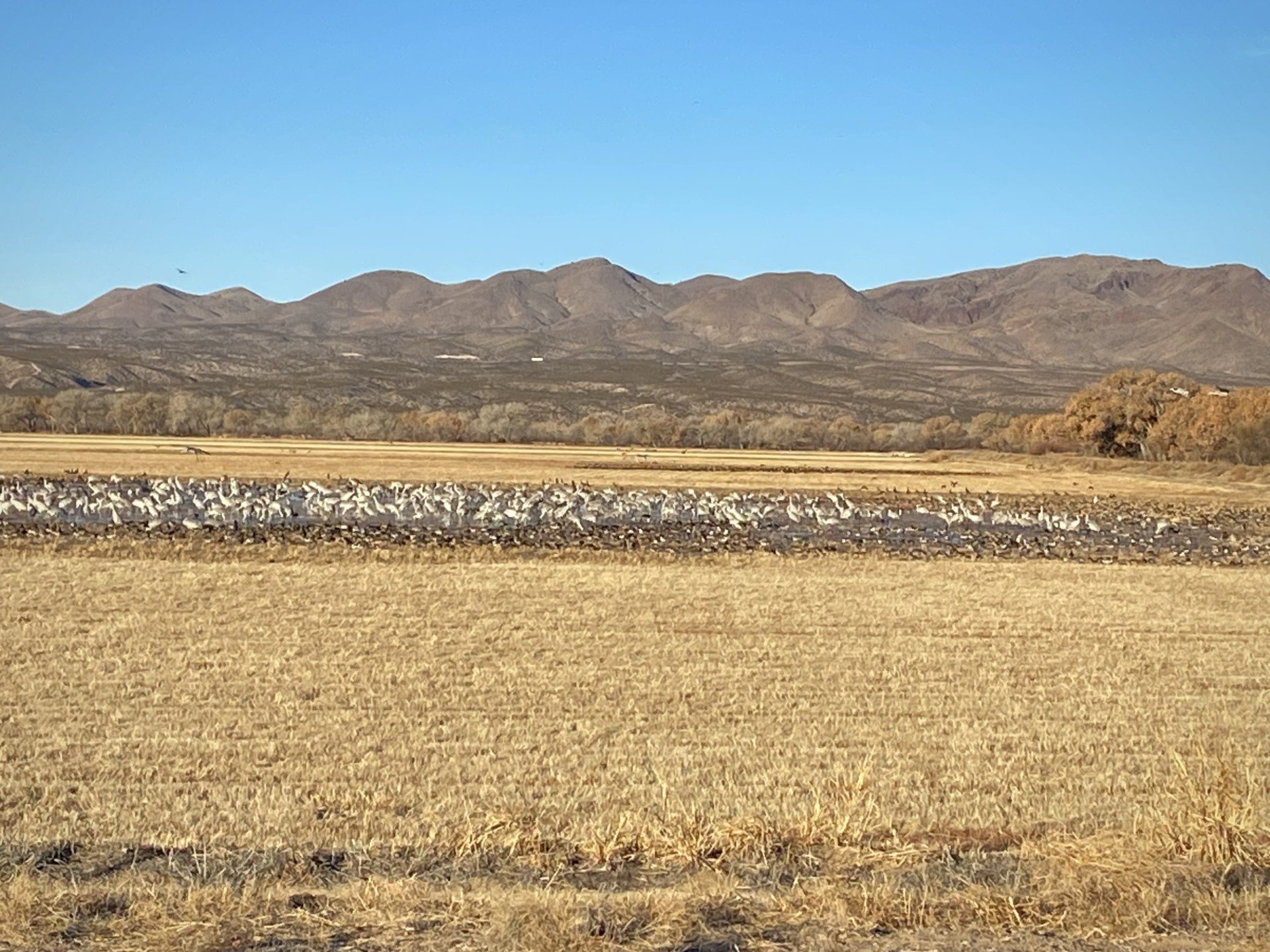
Flood up attracting waterfowl in a moist-soil unit. Photo: Claire Revekant/USFWS.
As fall gives way to winter, the refuge is focused on wrapping up moist-soil mowing and flood up. This time of year is when water management on the refuge is at its most intensive. Winter is peak waterfowl season, after all! Many factors are taken into consideration when deciding to flood up a unit: time of year, location of unit, weather, number of birds utilizing the refuge, water availability, seed production, and wildlife observation opportunities for the public. The refuge staggers flood ups throughout the winter season to ensure there is enough food to last the entire winter season. We are strategic about the location of flooded wetlands, making sure the public has areas they can view the overwintering waterfowl, while also providing areas the birds can use to escape human disturbance. Weather events encourage birds to move around the landscape, and cold temperatures tend to congregate birds, as open water is threatened by ice. Congregated birds increase the risk of spreading disease, so staff also make sure to provide feeding and roosting opportunities across the refuge, not just in one location. Checking the weather and planning ahead can be crucial to meeting waterfowl needs.
As the valley begins irrigation season, the refuge switches gear into spring drawdown and disturbance season. It is during the spring when the clock starts ticking as the refuge begins operations to meet its goal of growing millions of pounds of seed via moist-soil management. None of these moist-soil units are planted. The plants that grow are a result of the timing of water, air temperature, disturbance, and drawdowns. Drawdowns are staggered across the refuge to increase plant diversity and prolong habitat availability. They usually begin in April and continue through May with most drawdowns occurring within the first 45 days of the growing season. Units that did not hold water throughout the winter season are flooded during this time so they can also be drawn down. Long, slow drawdowns are more favorable than short, fast ones and the timing (temperature and rainfall) has a great effect on the species of plants that germinate. With climate and water availability being hard to predict, checking the weather and planning can be crucial to making decisions about drawdowns. If units are planned for spring disturbance, they are often drained quickly in March to allow the unit to dry for heavy equipment use. The application of fire can also be used as a management tool to disturb a unit. The springtime is when most moist-soil disturbance is scheduled (this mimics spring snow melt events which would upturn soil and set back woody vegetation).
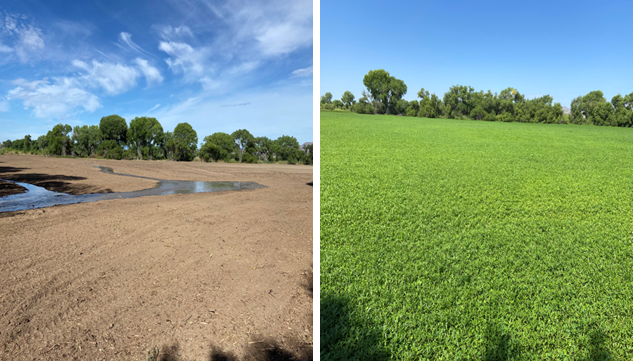
Disturbance in one of the refuge’s moist-soil units (left picture) resulting in the growth of desirable, seed producing plants (right picture). Disturbed units are flooded and drawn down after heavy equipment work concludes. | Left photo: Claire Revekant/USFWS, Right photo: Gerad Montoya/USFWS.

Cocklebur treatments require the use of heavy equipment and water to manage. Photo: Gerad Montoya/USFWS
Spring quickly transitions into summer and disturbance will continue into the summer if needed. Units are irrigated periodically to maintain moist soil, and water control structures needing maintenance are prioritized when and if staff time allows. June and July are dedicated to cocklebur treatments. Cocklebur is a prolific, undesirable plant that forms monocultures and offers little to no value to wildlife. Management entails mowing the plant and then flooding and holding water for a short period. Throughout the summer, staff monitor plant productivity and response to management.
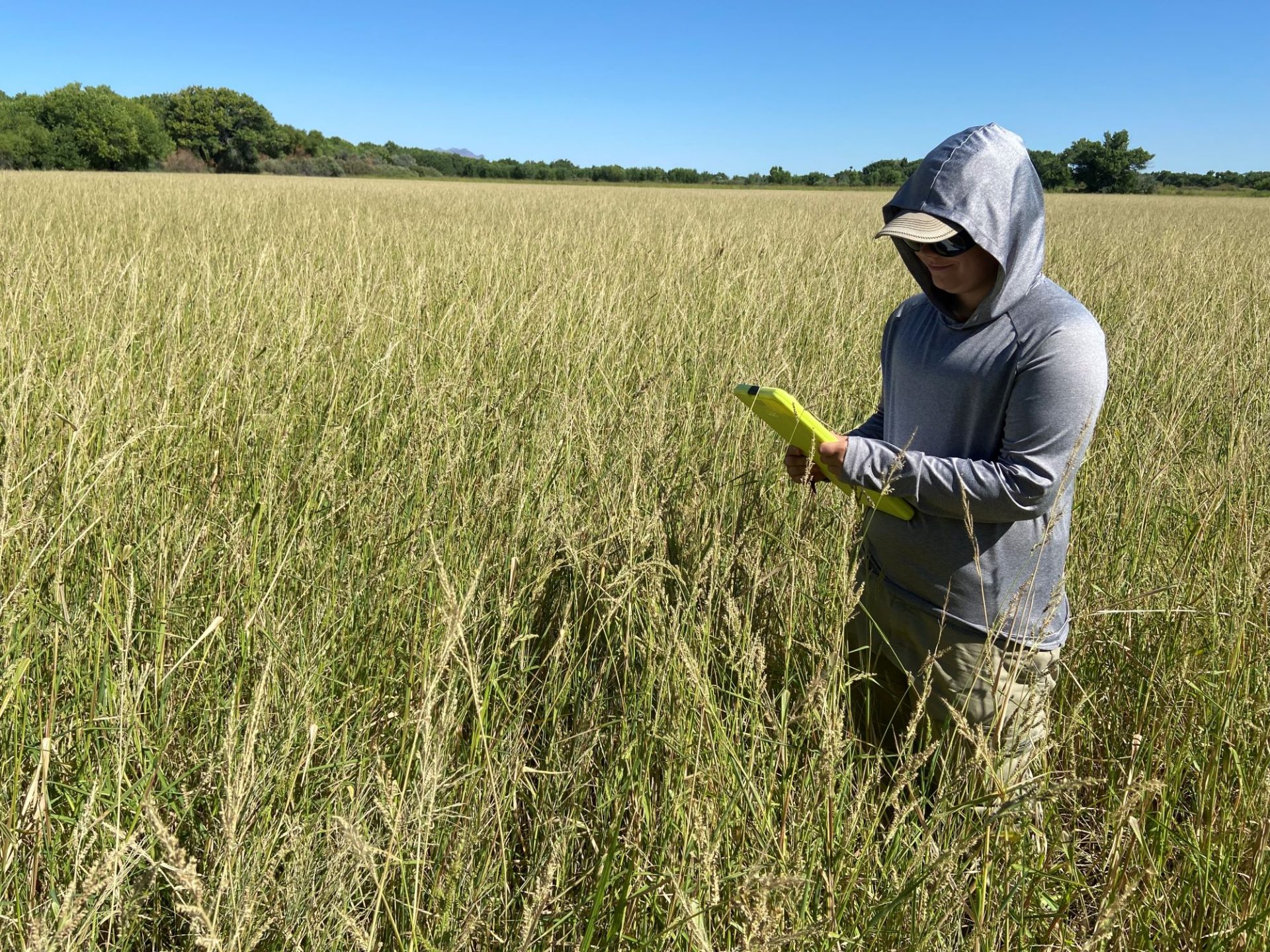
Refuge and Conservation Legacy technician, Carrie Chapin, conducting a seed yield survey. Seed yield surveys help the refuge determine seed production within the moist-soil units. Photo: Gerad Montoya/USFWS
From there, the cycle repeats itself with the start of the fall season and the return of ducks, geese and cranes.
Bosque del Apache NWR is an intensively managed refuge and it takes the dedication of staff, seasonal employees, the Friends of Bosque del Apache, volunteers, researchers, and visitors to keep it going. Every action is thought out, so if you have a question about what you’re seeing at the refuge or if this article has left you wondering, please do not hesitate to reach out.
For questions about moist-soil management, please contact the refuge at (575) 835-1828 or bosquedelapachenwr@fws.gov.