

It was a warm November day at Bosque del Apache National Wildlife Refuge when dozens gathered to remember and honor the legacy of John P. Taylor. Fields of salt grass stretched and yawned in the bright morning, reaching across white frosted soil. Young cottonwood leaves quivered in the breeze, mirroring the sunlight that chased ripples in the water carved by Northern pintails. A spectrum of willows and other sleeping shrubs wrapped around wetlands, reflections of fiery orange, burgundy and gray melting into blue. This was John Taylor’s world for almost twenty years, where he worked as Bosque del Apache’s Senior Biologist from 1985 until his sudden passing in 2004. Twenty years later, John’s vision to create a dynamic landscape – a mosaic of different habitats created and supported by mimicking the Rio Grande’s natural ecosystem processes – is still alive and visible everywhere.
A few at a time, colleagues, friends and family began trickling into the Lannan conference room inside the refuge visitor center, filling all corners of the room in huddles of three or four, chatting and catching up over coffee and pastries.
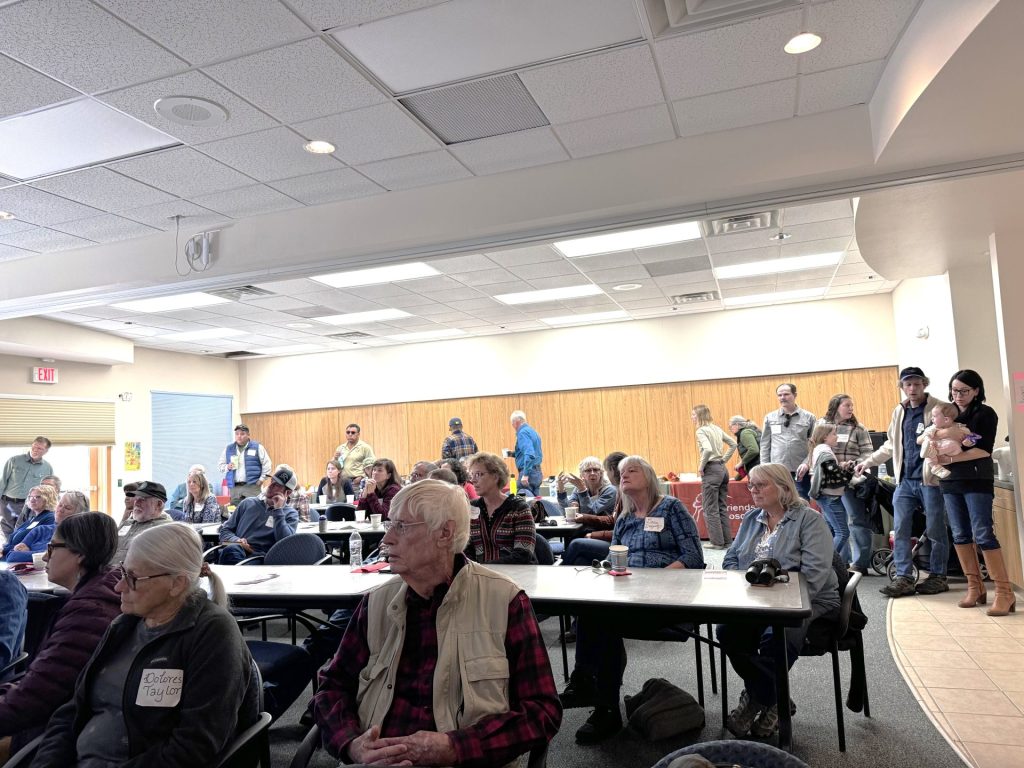
20 years after his passing, friends, family and colleagues pack BdA’s conference room to remember and reflect on John Taylor’s legacy.
Many had not met in a decade or more and braved the season’s first winter storms to travel from various corners of New Mexico, Colorado, Texas, Missouri and beyond. John’s large and close family, including children, grandchildren, siblings, nieces, nephews and even a few surprise primos infused the gathering with his familiar grin and spirit.
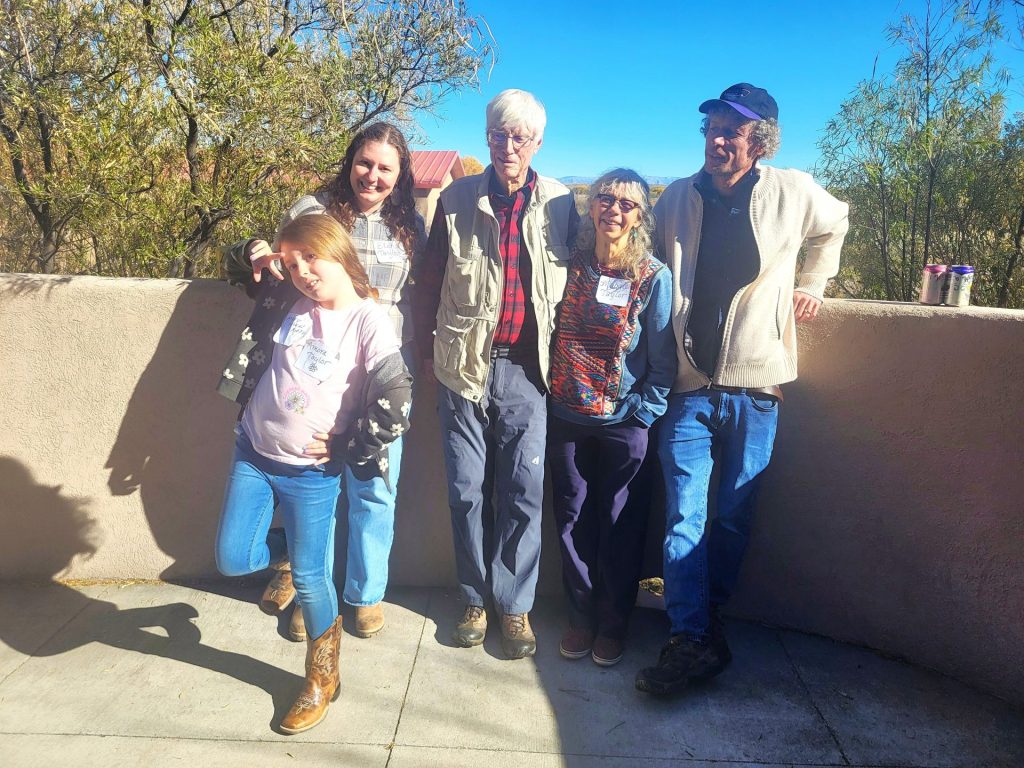
Pictured from left to right are John’s granddaughter, Amora, his daughter, Elena, colleague, Dr. Leigh Frederickson, John’s wife, Maggie, and son, Pablo.
Throughout the morning, as a room at capacity listened and shared thoughts and memories, it soon became obvious that John’s history with driving and vehicles, especially on the refuge, was the subject of numerous, white-knuckled adventures! More obvious was John’s enormous influence and regard as a mentor, teacher, scientist, co-worker, collaborator, family member and friend. He was all those things to the people who knew him.
Much like the mosaic of habitats he worked to foster on the refuge, John Taylor himself was a dynamic mosaic: a fertile patchwork of intellect, passion, curiosity and conviction, laced with common sense, generosity and a sense of humor necessary to navigate regional water politics, dense mosquitos and salt cedar – all moving together with the energy of a Datsun with John’s lead foot on the gas pedal!
John’s keen observations and his willingness to collaborate led him to understand that wetlands and other floodplain habitats disconnected from the river relied on the refuge’s ability to effectively use irrigation infrastructure to mimic and control seasonal flooding to promote important ecosystem processes and plant germination. And large stands of salt cedar on the refuge were suppressing native plant communities and created barriers to using controlled flooding to create and manage different habitats.
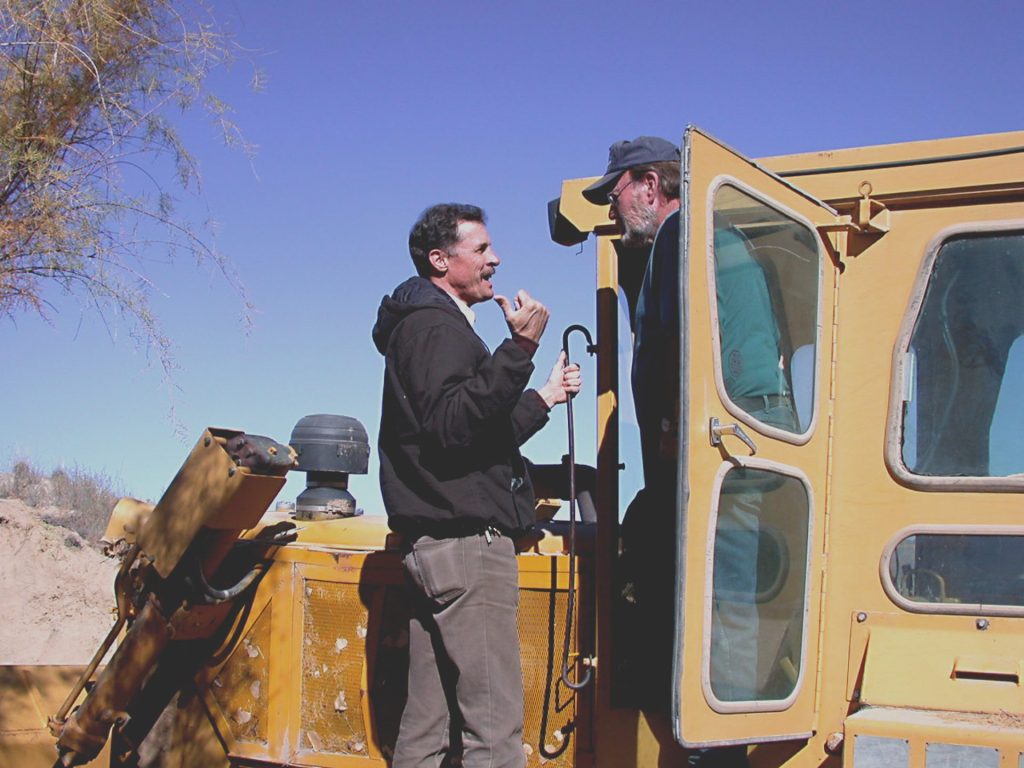
John Taylor consults with one of the refuge’s dedicated volunteers.
John worked with university scientists, such as Kirk McDaniel and Dr. Leigh Frederickson, and refuge maintenance staff to improve water and wetland management for ecosystem processes and pioneer new methods of more effective salt cedar control. Frederickson noted “John’s passion made him willing to engage with a wide suite of intellects and associated talent to facilitate good decision making. Fortunately, John was not hampered by limiting his information to university-based expertise, but instead recognized the need for, and importance of, first-hand, common-sense experience for implementing management actions.” Much of that experience came from refuge staff, who provided important insights and “became skilled at noting sites where their actions would lead to improvements to meet the challenges of higher public use,” Frederickson said.
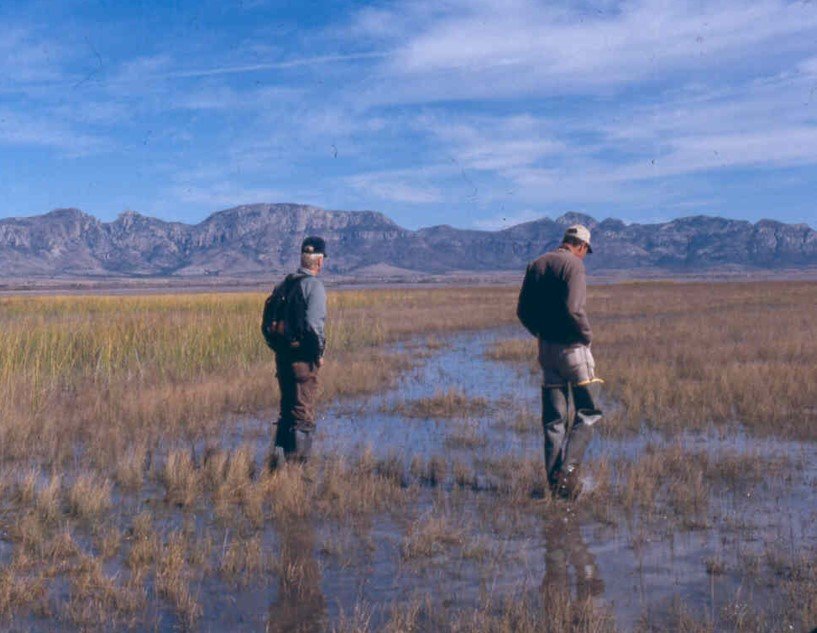
John Taylor surveys one of the refuge’s wetland units with wetland scientist and longtime colleague and friend, Dr. Leigh Frederickson.
Another of John’s longtime friends and colleagues, and former US Fish & Wildlife Service Hydrologist, Paul Tashjian, said “John made everyone feel special and important, and there was no pecking order in this. John saw the strengths of everyone he worked with and made everyone feel special, no matter if they were a GS-3 or 13, possessed a Ph.D. or a high school diploma, worked for the Game & Fish or the Bureau of Reclamation, or if they were a new student intern, an office assistant or the Regional Director! None of this stuff mattered to John; he saw folks where they were.”
These sentiments are echoed by Bernard Lujan, Bosque del Apache Deputy Refuge Manager. “When I was hired in the summer of 2000 as the water manager, John said, “One of the reasons I hired you is because you’re a farmer and you understand water.” At first, I didn’t understand what he meant but once I figured out my new job, I recognized that flooding up moist soil units for waterfowl food production is a lot like farming for small grains.”
As the refuge became more successful at growing food resources, the diversity and abundance of waterfowl increased, and Lujan accompanied Taylor on different surveys. “He would say, ‘You have to think like a duck to grow the moist soil grasses that waterfowl prefer.’ He would always tell me, ‘Taste it. Eat the seeds that waterfowl eat to help you think like a duck.’ And I did.” Lujan said.
“He was inspirational and a hard worker”, Lujan reflected. “He spent countless hours in the field to prove science or methodology and was determined to be proven right or wrong. If wrong, then he would choose another avenue to pursue to prove successful. Being wrong didn’t discourage him, but rather provided additional motivation to find the right recipe for success.”
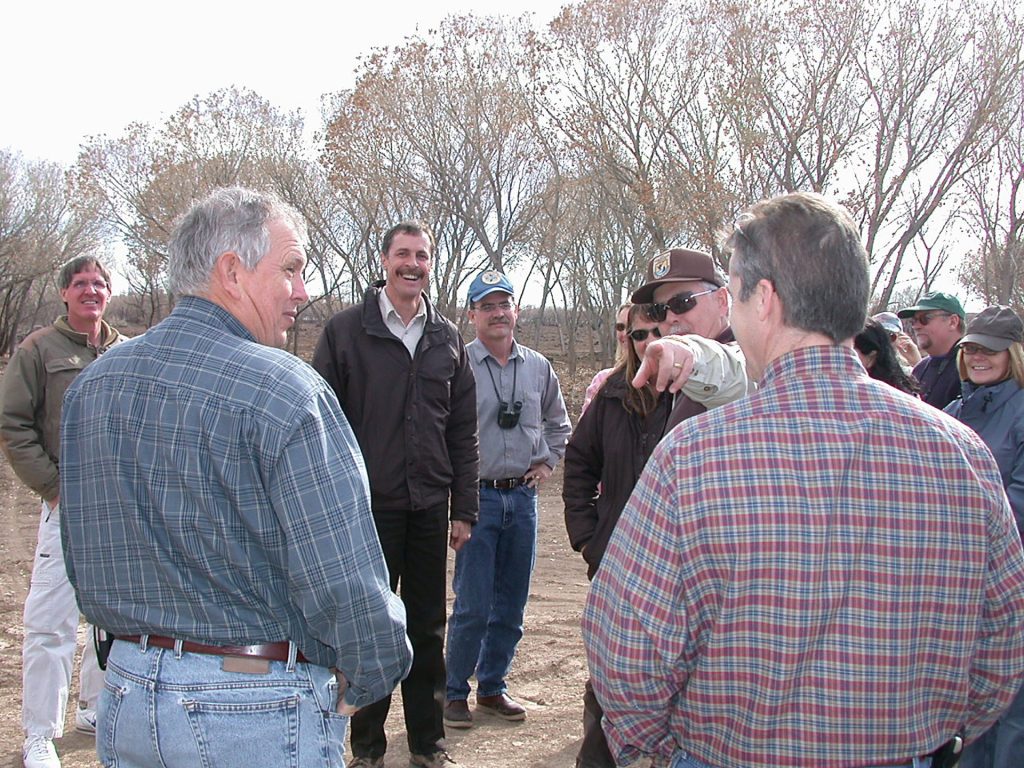
Area partners, including John Taylor, participate in a Land Management Research Demonstration tour at Bosque del Apache.
One would be hard pressed to find a person over the age of forty who worked with wetland and riparian management in the Rio Grande watershed who doesn’t have a “John Taylor story” of being impacted by his influence. Taylor devoted many years to enthusiastic and diligent study of the complex Rio Grande ecosystem, but it was his ability to fuse good science and management, inspire passion for the work and treat every person involved as a critical and special part of a management ecosystem that was truly legendary.