

Stilt Sandpipers | Photo by John Olson
Last month, Cornell’s Lab of Ornithology – in collaboration with Ducks Unlimited, the American Bird Conservancy, Audubon and Point Blue (among others) – published the 2025 “State of Birds” report and, as usual, there was some good news and some bad news.
Let’s start with the positives. Birding has never been more popular. There are close to 100 million birders in the USA, some 37% of the adult population. Moreover, a recent study has found that the majority of anglers and hunters are part of that number. As the report stated, “No other outdoors recreational activity brings together so many people from multiple regions and demographics.” Not only that, but it turns out that two of the public’s top priorities, the economy and healthcare, are positively influenced by our collective birding activity. It’s estimated that the economy benefits to the tune of $279 billion, which generates $38 billion of tax revenue and 1.4 million jobs. In addition, the health benefits arising from nature’s gentle touch are significant – but not always easy to quantify.
Given all the above, what could possibly go wrong? Unfortunately, bird numbers tell a different story. Overall, bird numbers continue to fall as key habitats continue to be compromised by lack of protection, temperatures rise and the availability of water for Nature diminishes. There are now 229 avian species that are of high or moderate concern, and although there are many isolated examples of successful conservation, we know that this requires focus and funding. We also know that we can expect further reductions in Federal funding for the foreseeable future, so the situation could well continue to deteriorate if nothing changes.
What does all this mean for our favorite refuge? Thankfully, the Yellow-billed Cuckoo and the Southwestern Willow Flycatcher, both found at Bosque del Apache, are not in the highest concern category, nor are most of the refuge’s winter visitors. On the downside, we accommodate around 10% of the “red list” bird species (low population and steep declines) and at least 30% of the “orange” (long-term losses and accelerating declines) and “yellow” (long-term losses and stable trend) lists. While many species are involved, one of the most vulnerable families are the shorebirds, whose numbers have fallen by a third and who seek out our oasis throughout the year. As wetland habitats continue to disappear, Bosque del Apache becomes even more important to these fragile and beautiful visitors.
Back in the day, canaries were used to warn miners about the presence of lethal gas underground. Similarly, our shorebirds are now trying to tell us something, and, here at Friends, we’re listening. That’s why we’re sounding the alarm, asking for your help, in whatever form works for you. Please take action to help us continue our mission of supporting the critical wetland and riparian habitats at Bosque del Apache, among the last remaining in the Desert Southwest!
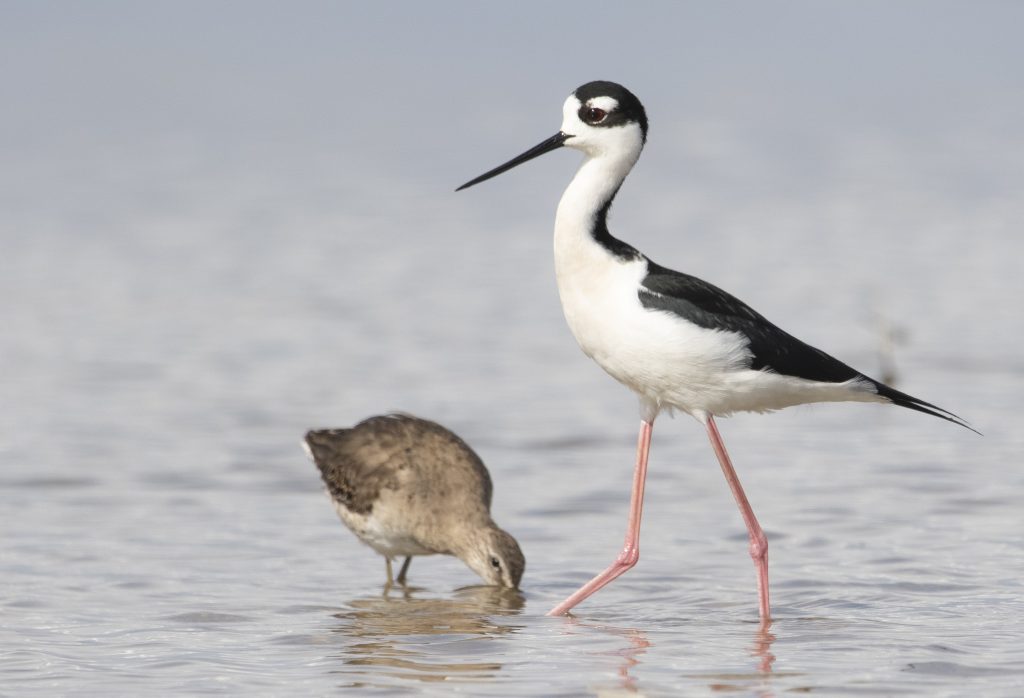
Photo by Alex Harper
Wondering what you can do to help?
- Your Voice Matters – Contact your representatives and let them know how important America’s National Wildlife Refuges are.
- Your Support Can Help Fill the Gap – To donate, visit us online at www.FriendsofBosquedelApache.org. Your contribution will help minimize interruptions to important refuge programs and projects happening in every season.
- Spread the Word – Tell your friends and family about the importance of this irreplaceable oasis in the desert, or better yet, bring them for a refuge visit so they can experience the magic of Bosque del Apache firsthand! Better still – invite them to join our mailing list so they will receive regular updates and newsletters. The more people who understand the importance of conservation, the bigger the impact we can have together!