
Article and photos by Mark Seth Lender. (© 2026 Mark Seth Lender; All Rights Reserved.)
The dried wild flowers of willow-leaf aster on their tall dried stems are waving and bending a call of distress. As if about to be carried away, and know it. They won’t be. They don’t know it. The wind I am not so sure. It speaks. Howling. If there is consciousness among the forces of nature, Wind is surely Awake.
A little brown bird lands at the very top of a whip-sawing aster stem. Even for the inconspicuous drab typical of females, this one takes it to a level. Sparrow-like and nondescript, no question about the “Her.” Beyond that? I would not hazard a guess.
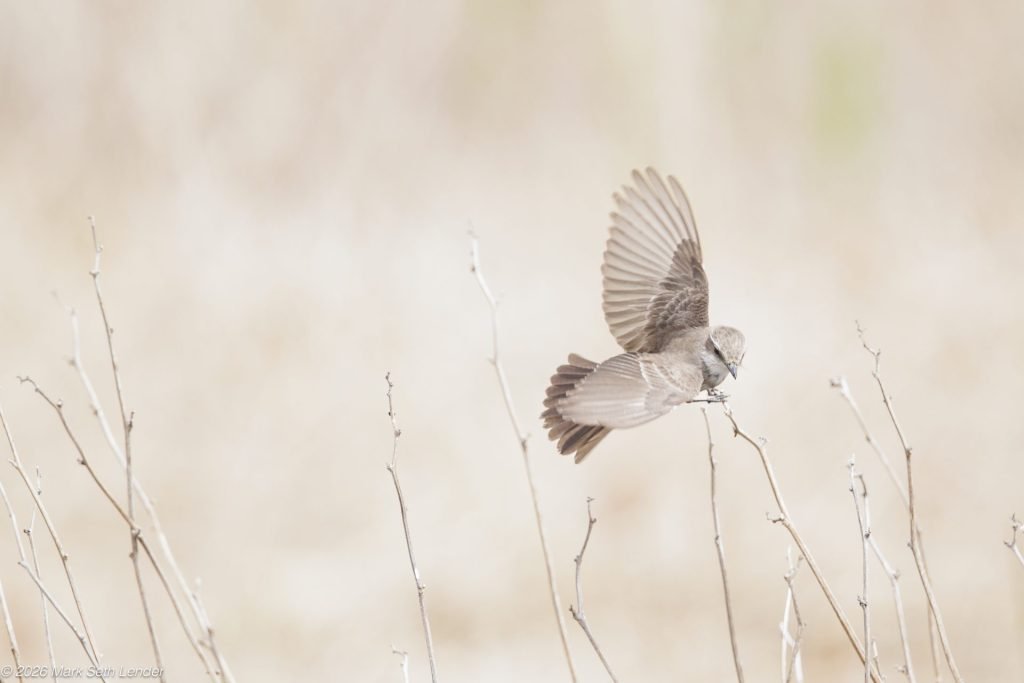
LBB (Little Brown Bird) Lands in the Willow-leaf Aster
I have no comment when it comes to LBB’s (Little Brown Birds). It is not their size. I am fascinated by insects who are much, much smaller. But they allow me close enough to see what’s going on. Without them taking off.
LBB’s always take off.
The wind turns. Little Brown Bird shifts, flares her wings for balance – and there it is. Now exposed on her body is the most gorgeous shade of reddish sunset peach I have ever seen.
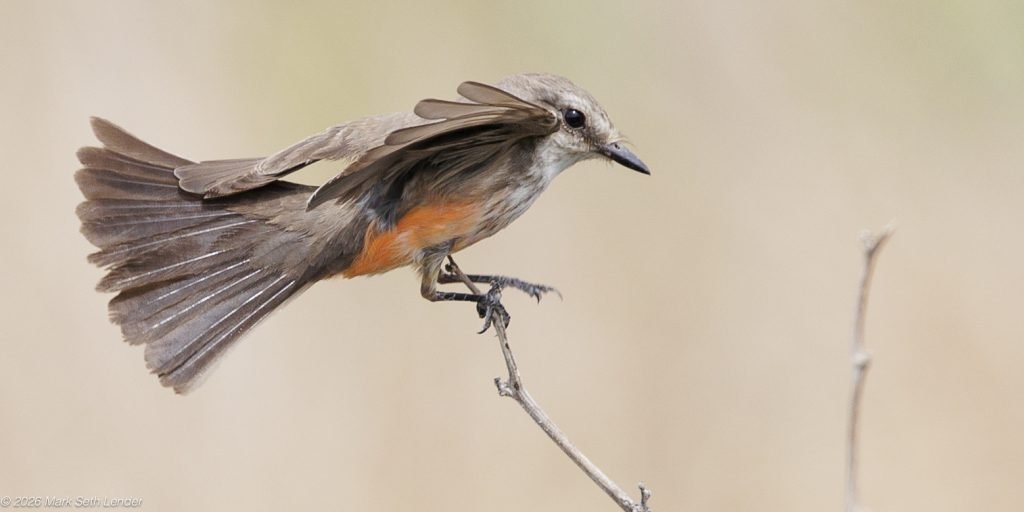
The Most Gorgeous Shade of Reddish Sunset Peach, Revealed!
I still do not know who I am looking at but now I want to find out. Every few seconds she looks up, cranes her neck, sideways, back, all the way to the vertical. Right… Left… Over her shoulder.
On guard.
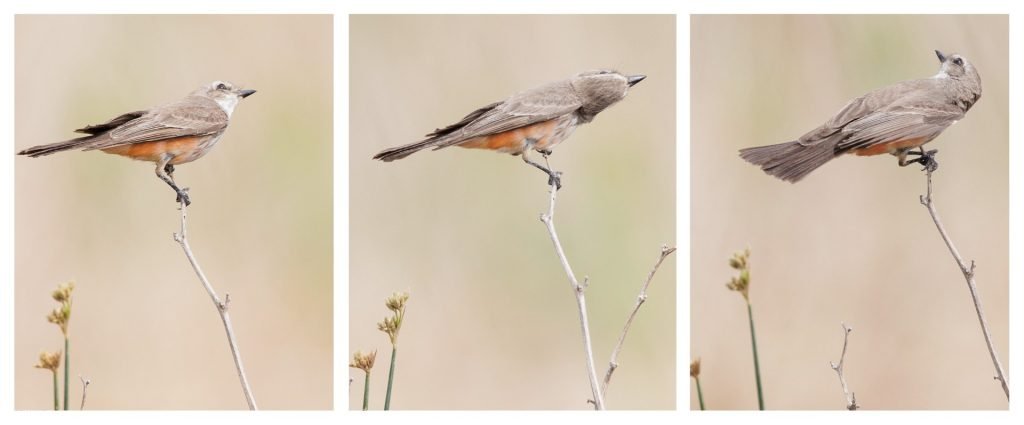
Vermilion Flycatcher, On Guarde
Why? For what? Another gust, she lets go, let’s the wind take her low into the nearby papyrus-like reeds, and gone. Immediately she is replaced by a bird unmistakably male because he is brilliant! The day is overcast and still he is an illumination of color. Color which also gives him a name: Vermilion Flycatcher.
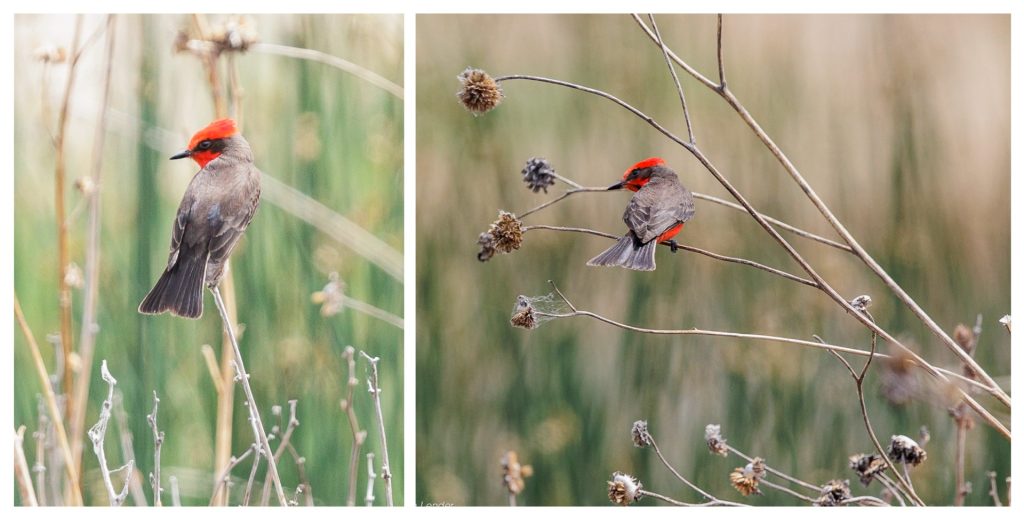
Vermilion Flycatcher, Male
The wildflowers rake back and forth. Despite the difficulty of just holding on, he finds under a dried flower, smacks against the stem, swallows, a small yellow worm. Captures another. Keeps it in his bill just long enough. There. Two pairs of almost invisible legs. Not worm. Weevil. Safe in his crop he carries them off into the close-by, wind-ragged cottonwood from which a minute later she emerges, returning to her posting.
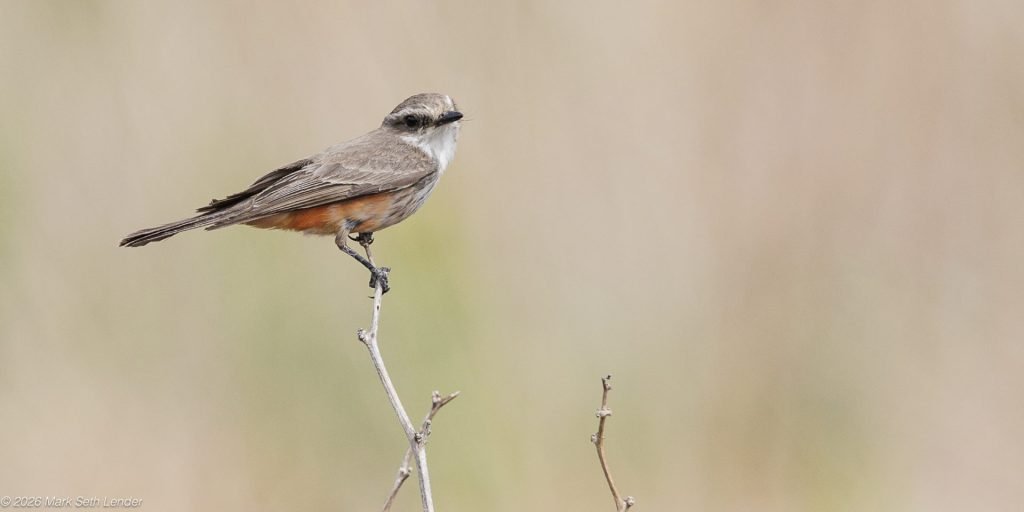
Mrs. Vermilion, Ready For Her Closeup
All is now revealed. They are guarding eggs, taking turns keeping them safe and warm. He coughed up at least one of those weevils and fed her. That’s his job.
While hers is to watch over.
Vermilion Flycatchers, in their season of raising young. I never would have seen them but for being there. In Nature. Time spent. This day, in Bosque del Apache National Wildlife Refuge. It is never for nothing.