
Article and photos by Emily Johnson, Invasive Species Specialist, Bosque del Apache NWR
In summer, the Rio Grande River corridor at Bosque del Apache is quiet. No burbling water, no cars, no machines. Just the wind in the cottonwoods, the light hum of insects, songs of birds, and the rustle of leaves as lizards dart around.
It wasn’t always quiet though. In 2019, heavy equipment roared into the area to start the Lower Rio Grande River Realignment project. This was the start of a ten year pilot project involving the US Army Corps of Engineers, Bureau of Reclamation, and US Fish and Wildlife Service, with the goal of moving three miles of river within the 1,000 acre project area on Bosque del Apache NWR (hereafter, Refuge). The intention was to increase water deliveries south of the Refuge, prevent plugs from forming, and prevent the river from perching (spreading out).
During the first two years of the project (2019 – 2020), a new channel was dug for the river using heavy equipment, effectively moving the river from an area of higher elevation to one of lower elevation, to keep it from forming plugs and perching. Moving the river using heavy equipment impacted a large area, necessitating the creation of a compensatory wetland mitigation site. The wetland mitigation area is a fifty-three acre site, previously covered in invasive Russian olive (Elaeagnus angustifolia) and salt cedar (Tamarix spp.) trees, with intermittent stands of mature cottonwoods (Populus deltoides). The goal of the site was to remove woody invasive species using heavy equipment and restore the area, allowing native riparian vegetation to grow back in.
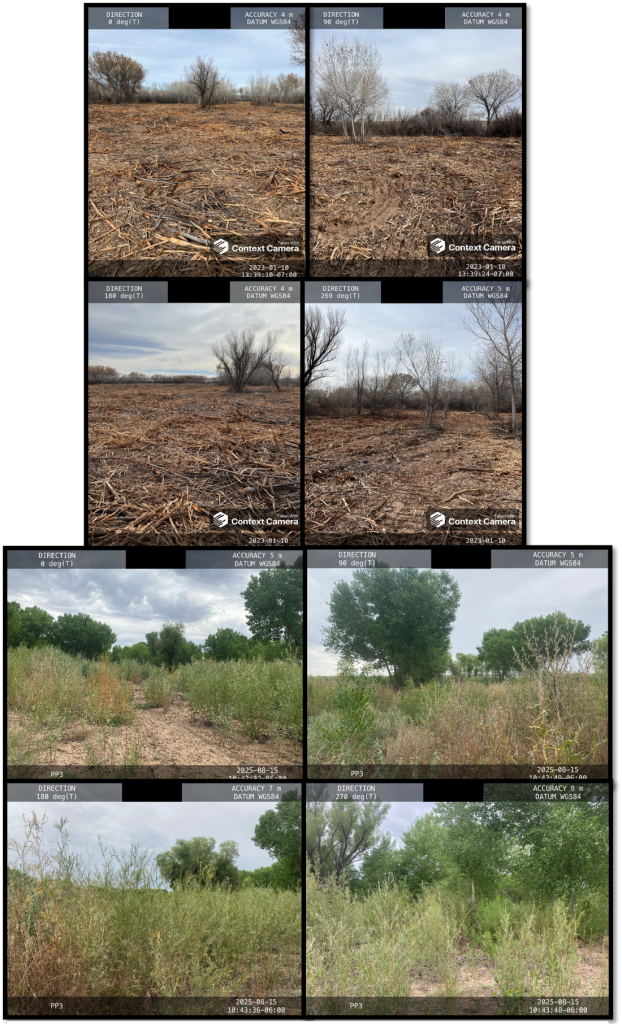
Photo points documenting change at one site in the realignment project area from January 2023 to August 2025. Note the abundant native species regrowth following clearing of woody invasive species using heavy equipment.
Over the course of the project, the Refuge created two additional habitat restoration sites (one site being twenty-two acres and the other twenty-six acres) within the realignment project area. These areas were densely covered in invasive woody species, with sections of mature cottonwoods. They were cleared of the woody invasive species using heavy equipment, before following up with restoration actions.
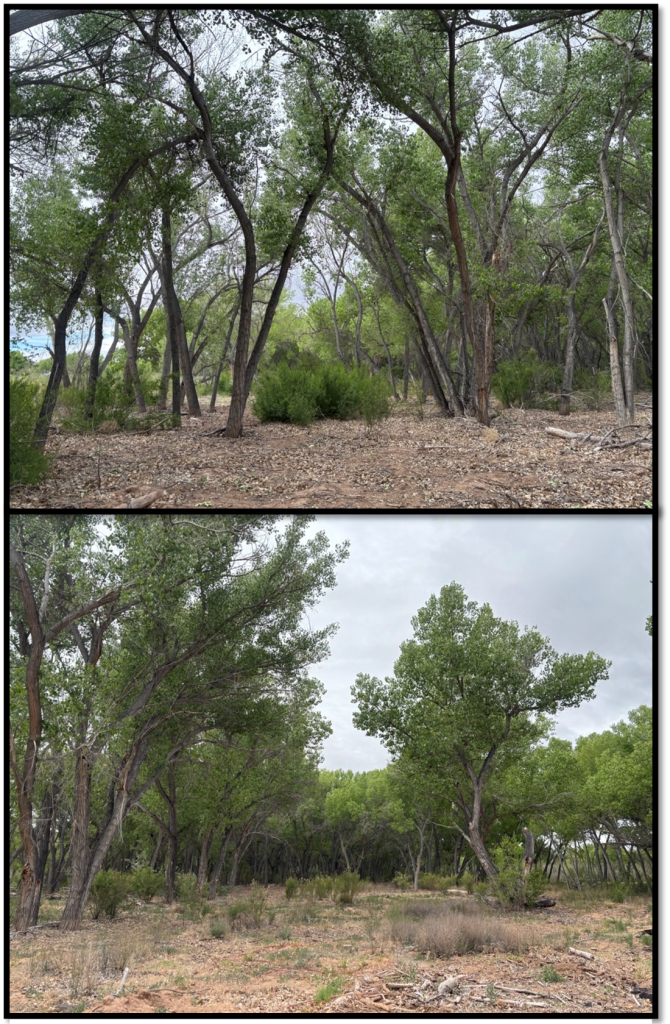
Habitat restoration sites showing new growth of native understory species following clearing of woody invasive species using heavy equipment.
The ultimate goals at the wetland mitigation site and the two habitat restoration sites were to remove woody invasive species and implement restoration to encourage growth of native plant species and create high quality habitat for all species that utilize the river corridor, but especially for federally listed species, like the Southwestern Willow Flycatcher and Yellow-billed Cuckoo, which nest on the Refuge. At this point in the project (year seven), the focus is fully on restoration: making sure invasive species don’t take over again and that slower growing, native species have time to fill in open areas.
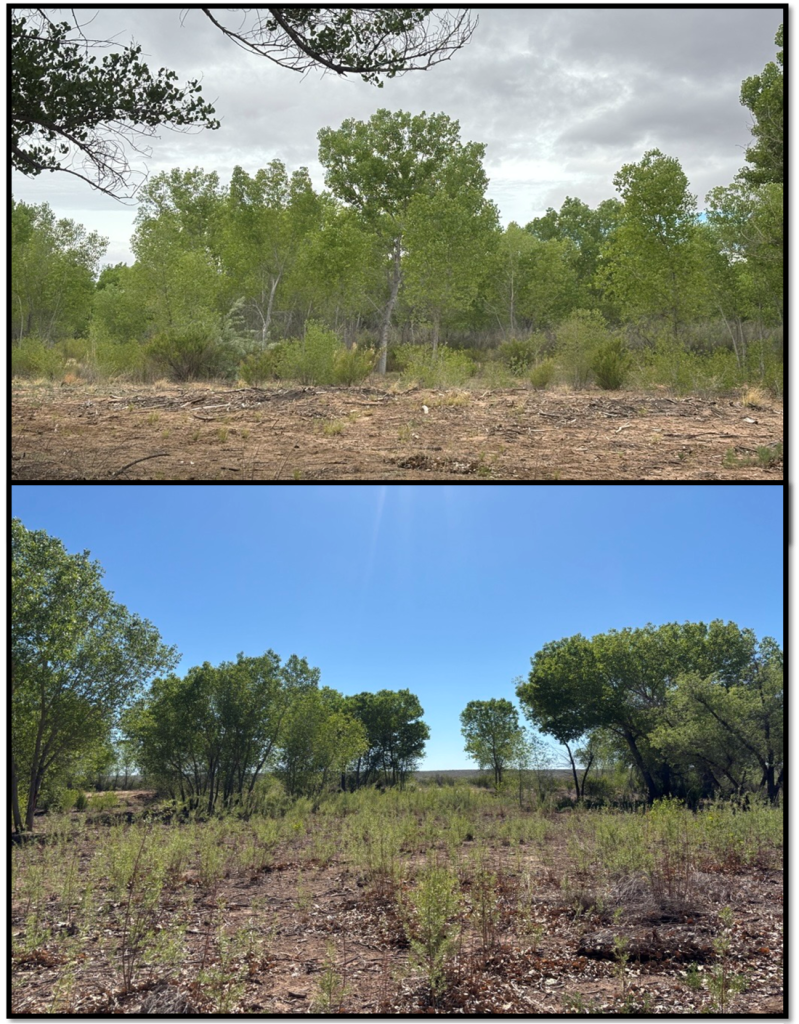
Photos from the wetland mitigation site showing mature cottonwood stands and native species, like coyote willow (Salix exigua) and willow baccharis (Baccharis salicina), filling in the understory.
Restoration actions haven’t been limited to the mitigation site and two habitat restoration sites though. There are restoration needs throughout the 1,000 acre project area. For example, an area where the river repeatedly formed a plug before realignment was used to store excess dirt (spoil piles) while the new channel was being dug. Following completion of the new channel, the Bureau of Reclamation flattened the spoil piles, leaving a large open area ripe for invasion by plants like kochia (Bassia scoparia) and Russian thistle (Salsola spp.). To prevent this, the area has been seeded with a native grass mix of alkali sacaton (Sporobolus airoides) and sand dropseed (Sporobolus cryptandrus), as well as various other native plant seeds collected on the Refuge. The purchase of seed was supported through a grant and the help of Friends of Bosque del Apache.
The Refuge has also been spreading screwbean mesquite (Prosopis pubescens) seed throughout the realignment project area. Screwbean mesquite was historically more widespread through the river corridor than it is today. Screwbean mesquite seeds are tiny, difficult to remove from their pods, and require scarification before planting. We chose to utilize the digestive systems of native wildlife that inhabit the Refuge to remove seeds from pods and scarify them. Many species consume screwbean mesquite pods as food through the autumn and winter, including elk, deer, and javelina. We placed piles throughout the realignment project area along known movement corridors and observed which species consumed the pods using game cameras. The hope is that wherever these species deposit the seed, there will be new growth of screwbean mesquite trees.
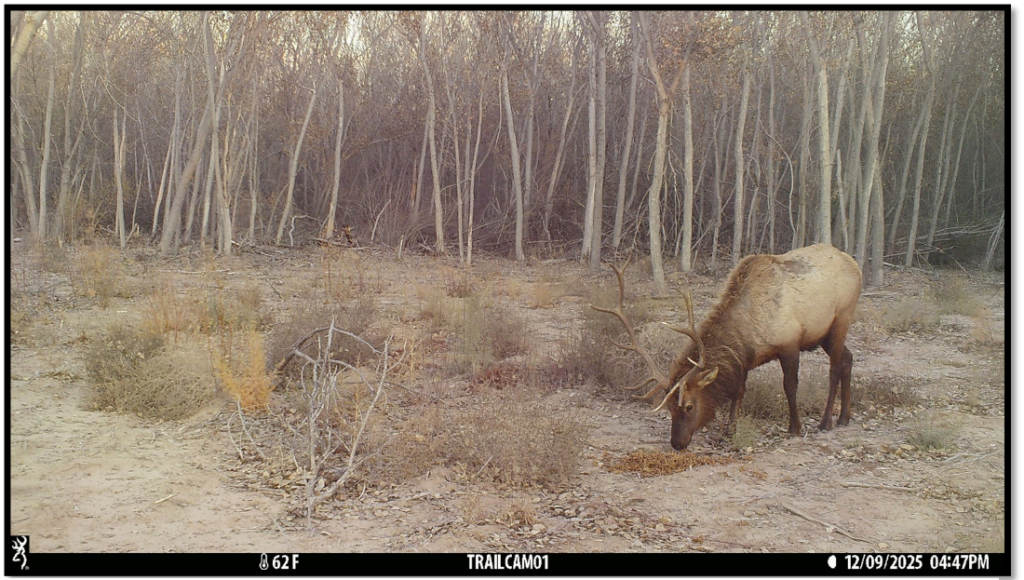
Bull elk consuming piled screwbean mesquite pods in a restoration site.
Though it may not be immediately obvious, burning piles of non-native woody vegetation that were removed from the mitigation site and habitat restoration sites are restoration actions too. These piles prevent the growth of native species and allow sites for non-native species to grow, which are harder to treat. Pile burning happens through the winter, when moisture is more prevalent on the Refuge.
One of the greatest joys of this realignment project is to watch the site transform with the Refuge’s actions. It’s incredibly satisfying each time a new native species is observed or wildlife and their signs are glimpsed in the project area.
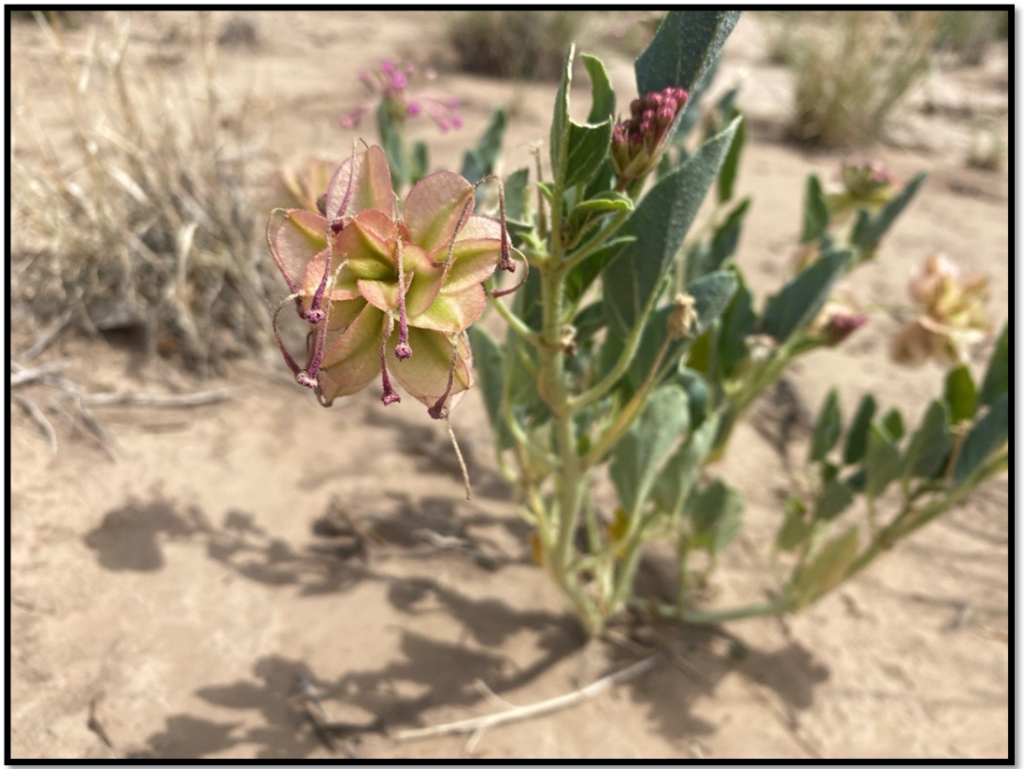
A sandpuff (Tripterocalyx micranthus), a native wildflower, blooming in the realignment project area.
Now that the noise of heavy machinery is gone, the realignment project area feels wild and peaceful. With continued restoration work, it will remain a quiet ‘refuge’ for native wildlife and plants within the greater Refuge for many, many years to come.
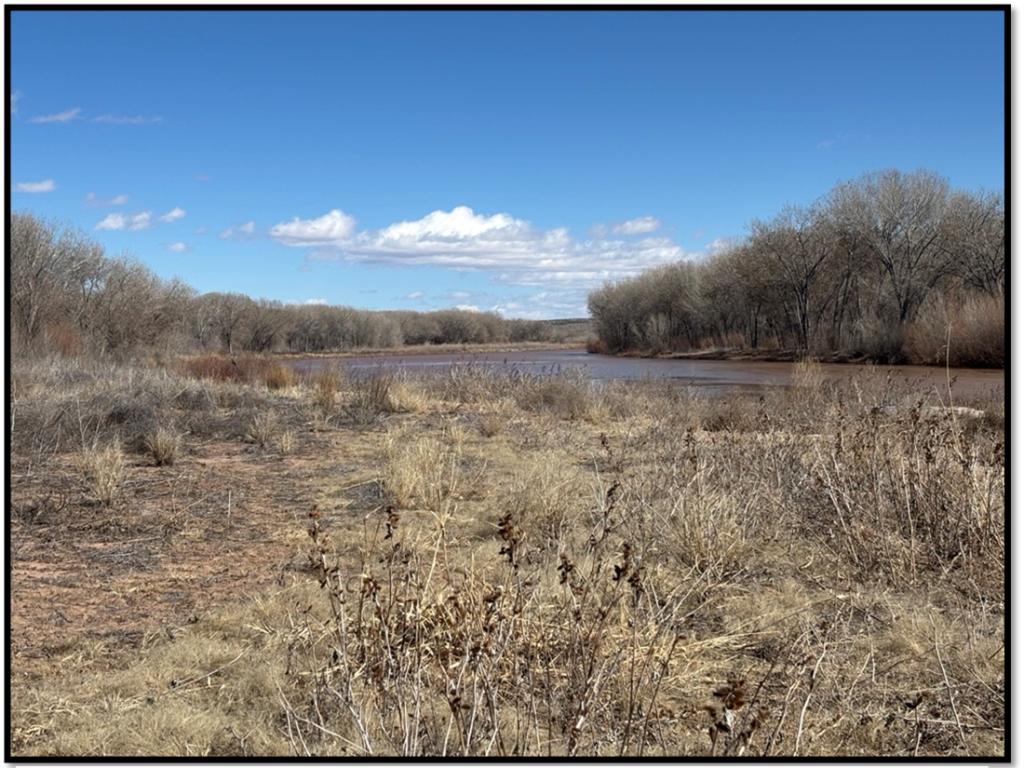
A quiet winter afternoon along the Rio Grande River, within the realignment project area.