





About the Candelaria Nature Preserve
A 167-acre City Open Space in Albuquerque’s North Valley
and
Friends of Candelaria Nature Preserve
A Committee of the Open Space Alliance
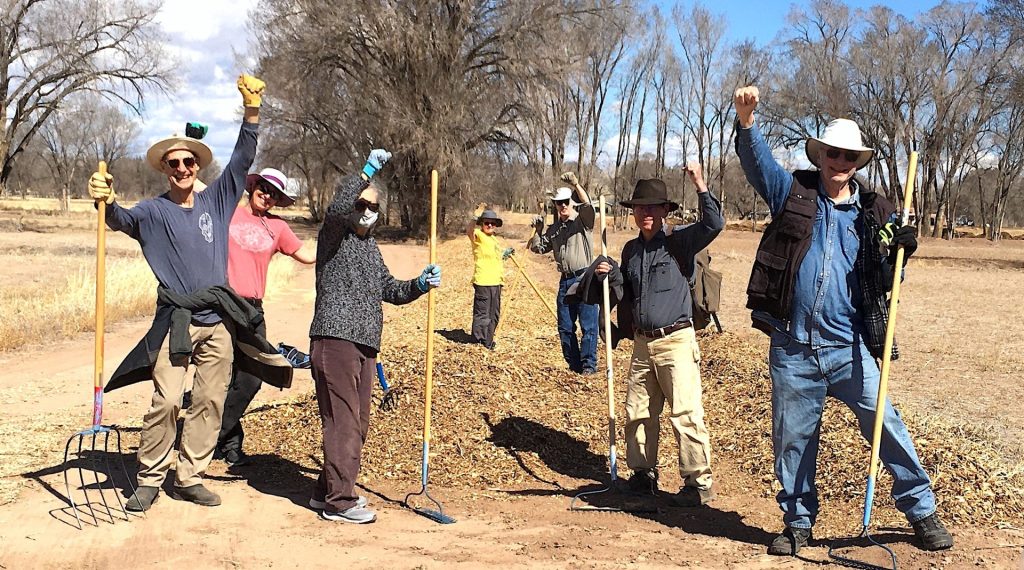
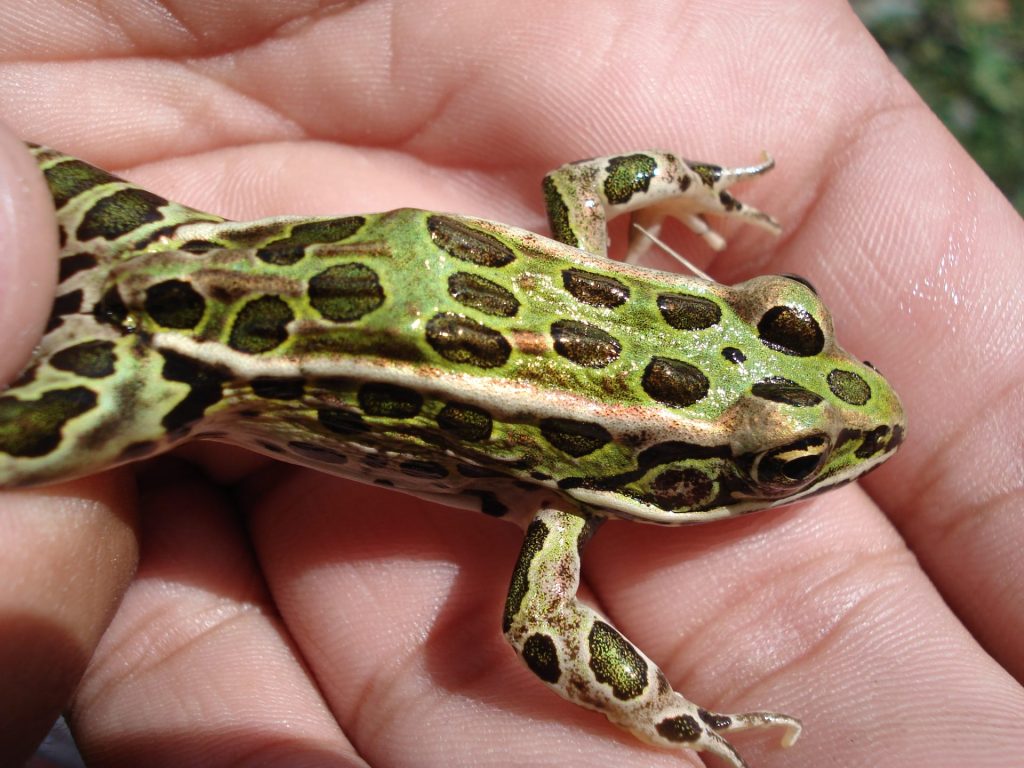
At left, early enthusiasts about the work to transform the Candelaria Nature Preserve to habitats for native wildlife. At right, a young northern leopard frog, (Lithobates pipiens), a species whom the volunteers hope to entice back to the Preserve. Photo at top by Jeannette Allen; Leopard frog, by BuBZ at the English-language Wikipedia, CC BY-SA 3.0, https://commons.wikimedia.org/w/index.php?curid=4306987.
This is the saga of an ongoing community-driven initiative that inspired and supports the City of Albuquerque as it transforms the Candelaria Nature Preserve (CNP), a City Open Space, from primarily commercial farmland to a wildlife preserve and nature study area for all people. This particular story of this land begins in 1978 when the City of Albuquerque purchased 167 acres of land from the Sandia Foundation. For over 40 years the land was managed by commercial farmers under contracts to the City. When the deleterious effects of that commercial farming came to the attention of neighbors, they alerted City leadership. It became apparent that the City was out of compliance with policies of the Land and Water Conservation Fund which had provided $590,000 of the $1,707,000 purchase cost, and the City immediately moved to correct the situation.
The City directed its Open Space Advisory Board to convene a Technical Advisory Group of specialists in a multitude of areas relevant to management of the CNP. Over about four years, the Technical Advisory Group created a Resource Management Plan (RMP) for the CNP. Signed in 2021, the RMP stipulates that the CNP is to be managed as a nature study area and wildlife preserve in perpetuity, providing access to outdoor recreational opportunities for all residents and visitors with minimal disturbance to wildlife. The RMP provides comprehensive guidance and timelines for transformation of the Preserve over the next 20 years. It is available for public review at the City’s CNP website: https://www.cabq.gov/candelaria-nature-preserve (Scroll down to, “Related Documents” and “View the final adopted Candelaria Nature Preserve Resource Management Plan.”)
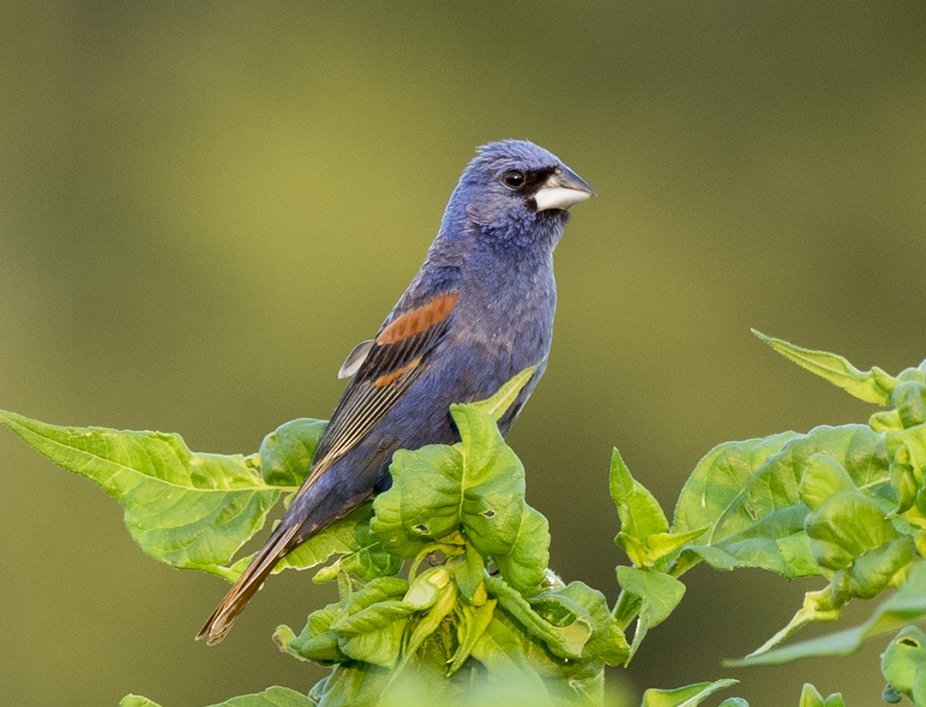
Blue grosbeak (Passerina caerulea), Photo by Andrew Weitzel.
The RMP recommends flexibility in its use as guidance for implementation, but it is clear on its major directives. The RMP describes a comprehensive, long-term effort to transform the Preserve from commercial farmland and dominance of non-native species to a mosaic of habitats that will support diverse native species and, as time goes by, will require less and less intervention from humans to maintain healthy native ecosystems.
The City has executed a five year contract with Ciudad Soil and Water Conservation District (Ciudad SWCD) to manage and lease the Preserve. Ciudad SWCD has entered into a sublease agreement with Rio Grande Return to implement restoration efforts at CNP.
Transformation of the CNP is a struggle. Invasive species took advantage of the farmers’ irrigation and established strong footholds. The soil had been compacted by heavy equipment, and we suspect harm to important soil microbes from pesticides. Resources and time are limited, so the work is highly strategic, experimental, and adaptive. CNP managers and volunteers are learning as we go. Managers make iterative improvements based on monitoring and site conditions. Regular field observations and photo point recording inform the next year’s approach. This is a story whose end we do not yet know.
Where is the CNP? It lies in the North Valley between the Rio Grande River and Rio Grande Blvd about 2 miles north of I-40. The main entrance is at the west end of Arbor Rd. NW.

The CNP is comprised of distinct tracts:
• North Tract – west of the Duranes Lateral, about 90 acres
• South Tract, 33 acres south of Candelaria Rd.
• Rio Grande Nature Center State Park – 38.8 acres leased from the City
• Tree Nursery Tract – 7 acres east of the Duranes Lateral along Rio Grande Boulevard
Each field has a specific treatment within each year’s Crop Plan, available on the City’s website: https://www.cabq.gov/candelaria-nature-preserve.
Specific management goals are to create a mosiac of these native habitats: Damp Soil Wetland, Ephemeral Wetland, Damp Soil Grassland, Dry Soil Grassland, Salt Shrubland, Arroyo Margin Shrubland, and Sandbar.
Practices that guide field work include the following:
• Minimize soil disturbance.
• Use hand labor in sensitive areas to reduce soil compaction.
• Remove exotic species while restoring native species in phases over time.
• Keep vegetative cover for wildlife until new plantings are established.
• Establish habitat for pollinators, birds, and native fauna.
• Improve and expand the wetland ecosystem.
• Create appropriate recreation opportunities while minimizing wildlife disturbance.
These questions dominate our thinking:
– To what extent will nature take over and maintain healthy native ecosystems without human intervention over the 20-year period of the RMP?
– What interventions will achieve this condition most effectively?
– How will climate change alter water and temperature regimes over the next 30 years?
Answers will come with time and work.

Claret cup cactus (Echinocereus coccineus). Photo by Jeannette Allen.
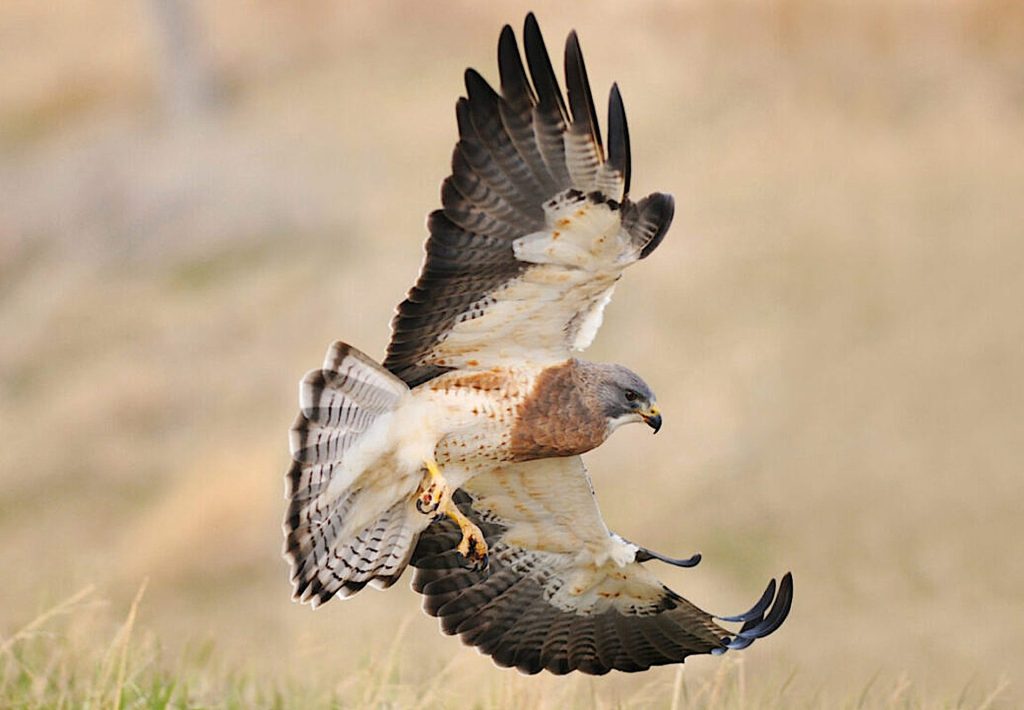

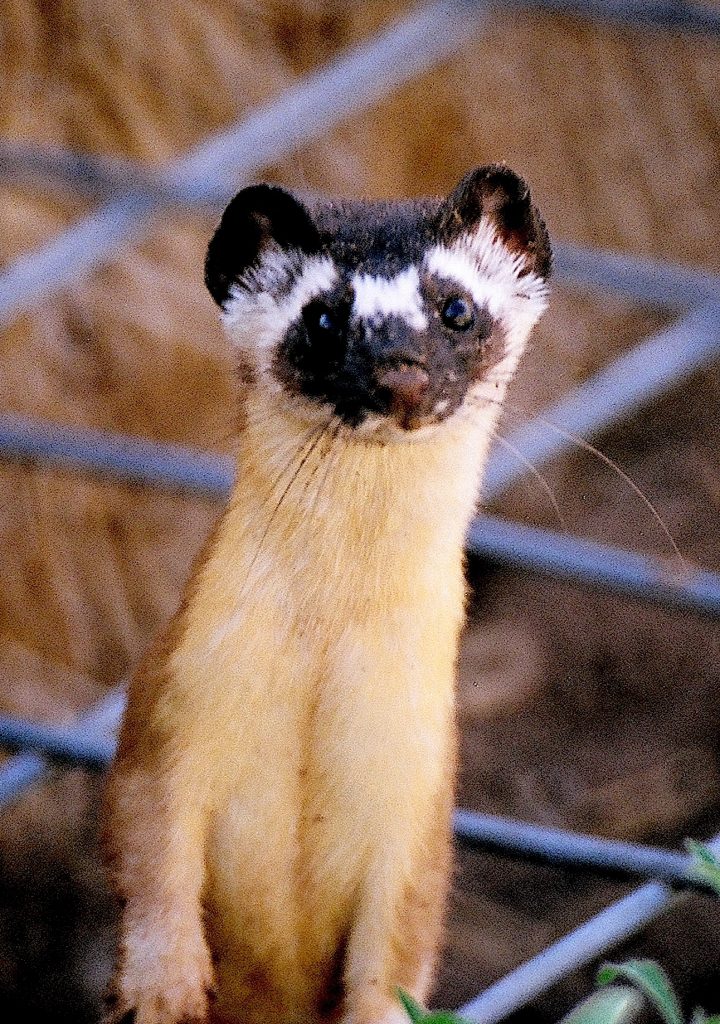
Clockwise from above left, a Swainson’s hawk (Buteo swainsoni). Nesting pairs live at the CNP every summer, and the bird is featured on the Friends of CNP logo. Milk vetch (Astragalus spp). Long tailed weasel (Mustela frenata). Photos by the Ecological Council of Sacramento; Brandt Magic, and Bill Pentler, respectively.
Resources are fragile, and protection is the primary management objective. The CNP is entirely fenced, and recreation for visitors is carefully designed to provide nature-based experiences while protecting wildlife.
Guided public tours are offered the last Friday of the every month year ‘round and upon request as feasible. (Contact Friends of CNP, below.) Along the public tour there will be 10-12 interactive waystations. Two public wildlife viewing blinds at western and eastern, points along the perimeter are nearly completed; the Woodward House will eventually hold a room of exhibits; and the seven-acre Tree Nursery Tract will become an open air education center.

Friends of Candelaria Nature Preserve
All these developments at the CNP have been most intriguing to certain City residents. Four members of the Technical Advisory Group expressed a keen interest in forming a Friends group, and so we did in November 2021. The author was asked to lead the group, because the other three members did not have the time! I had recently retired and this felt like a gift. It still does.
The mission of Friends of CNP is to serve as a guiding body for non-governmental support of projects to build and maintain the ecological health and educational activities of the Candelaria Nature Preserve, in accordance with the RMP of January 2021 and in collaboration with the City of Albuquerque’s Open Space Division. Annual reports are available on request.
The Friends of CNP now number about 100 members from neighborhoods all over the City. In mid-October, 2023 we became a Committee of the Open Space Alliance (http://openspacealliance.org/), which organization’s mission aligns with ours. We are excited about collaborations across the City under the OSA umbrella.
What do we do? Friends of CNP volunteers work in the fields of the Preserve every Monday and Friday morning, supervised by the City’s contractors, Ciudad Soil and Water Conservation District and Rio Grande Return. We set ourselves to whatever tasks we are told are needed that day: gathering tumbleweeds, pulling elms from the ground; sowing seeds, transplanting shrubs and trees from the tree nursery at the Woodward House into the fields; spreading mulch around the field boundaries to discourage weeds; and hand-watering when irrigation is not an option. We lead the monthly public tours as well.
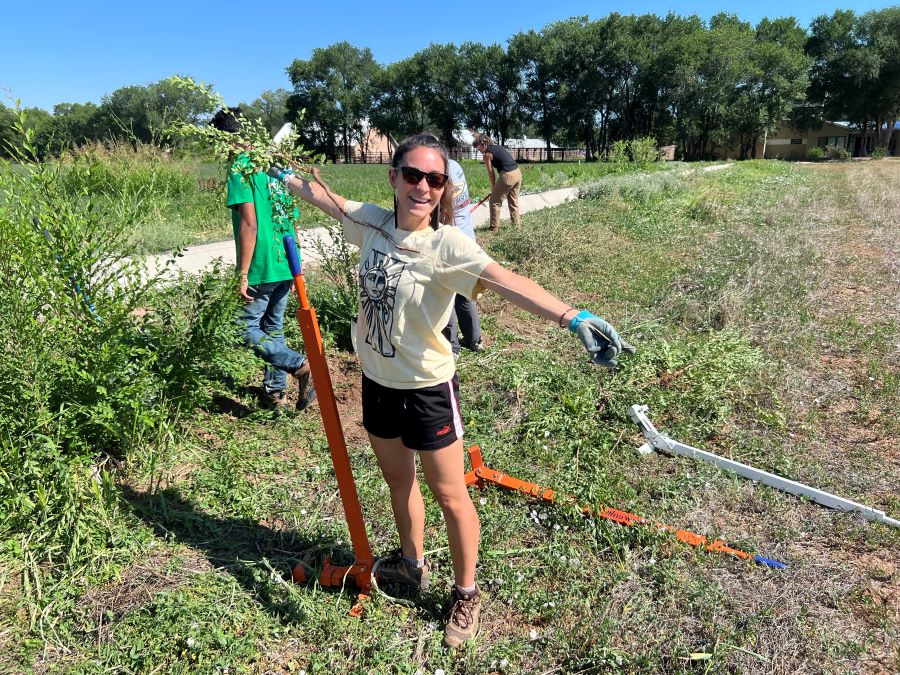
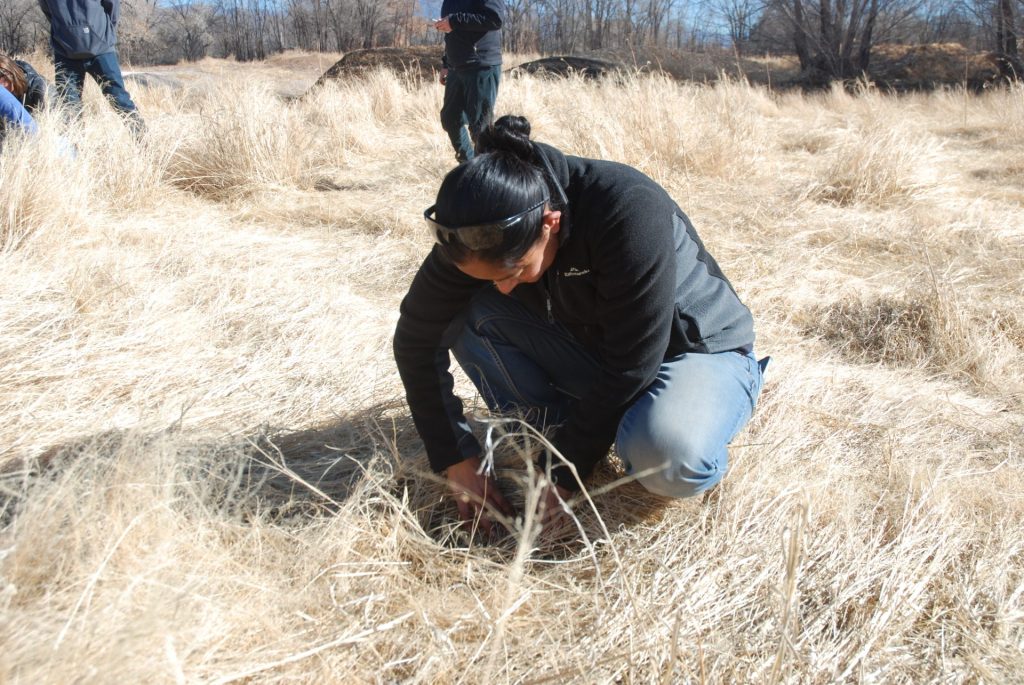
At top, a volunteer demonstrates the astonishing length of a young elm tree root. Above, a visitor probes the thatch left by teff, a non-invasive crop planted for its ability to hold invasive plants at bay while providing seeds for birds and habitat for insects. Photographs by Jeannette Allen.
We have monthly meetings on Zoom that feature presenters with expertise related to land transformation and management. For example, Sylvia Rodriguez gave a presentation on Acequia History, Culture, and Ecology; Peter Callen on Wildlife Corridors of New Mexico: Jaren Peplinski on the Urban Waters Federal Partnership: and David Parsons on The Meaning and Value of Rewilding. Upcoming presentations include the topics of citizen science, soil microbiology, and wildlife observations at the CNP.
An Interpretive Plan for the CNP
The author has a work history of science education and interpretation and accepted the invitation of Albuquerque’s Open Space Division Superintendent Colleen Langan-McRoberts to manage development of an Interpretive Plan for the CNP. Using guidelines and training from the National Association for Interpretation (NAI) (https://www.interpnet.com/), and professional facilitators certified by NAI, we are developing a strategic document intended to guide the City in how we will tell the story of the Preserve. In fact, story itself is to be our primary communication tool. If readers are interested in the CNP Interpretive Plan, please contact the author, below.
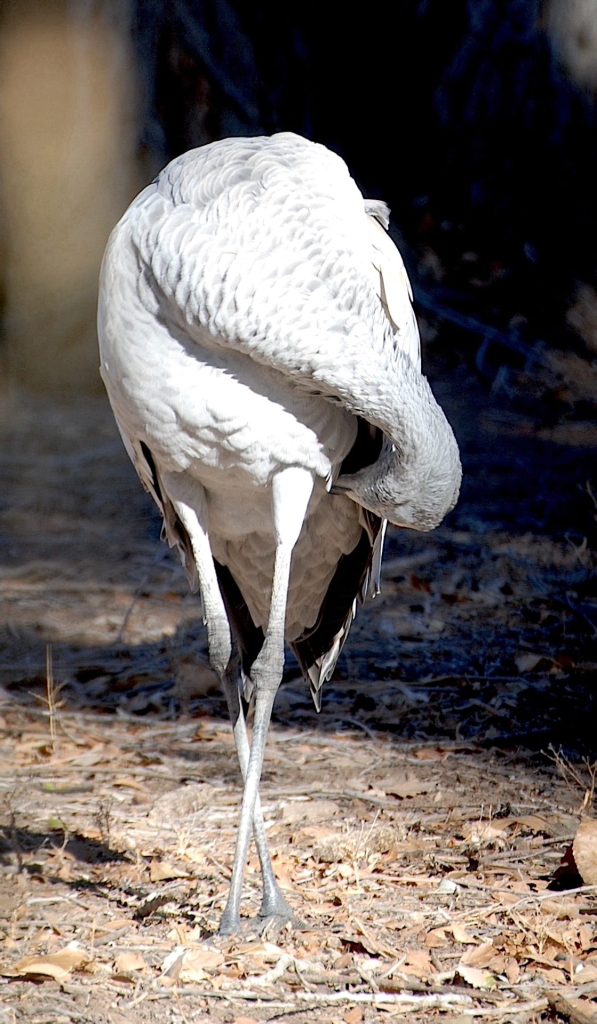
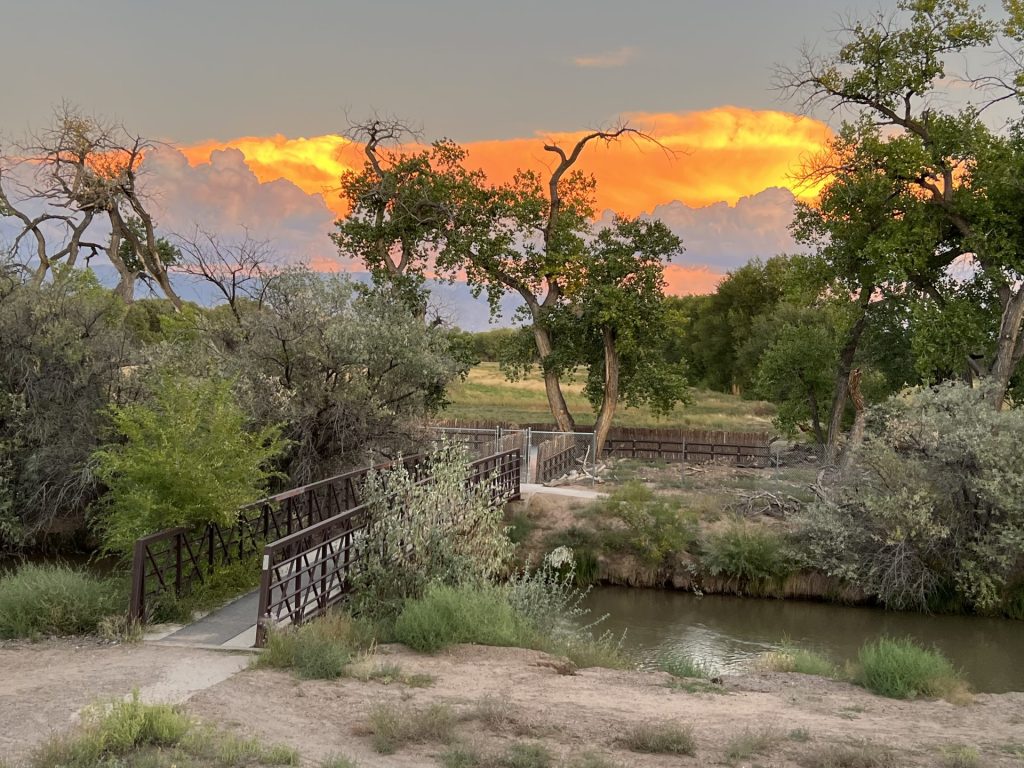
At left, Sandhill crane. At right, bridge from the Rio Grande Valley State Park trails to the new east-facing wildlife viewing blind. Photos by Jeannette Allen.
Anyone is welcome to join Friends of CNP. For the time being there are no dues. We urge members and others to make tax-deductible donations that pay for equipment, seeds, plants, and Interpretive planning and sign design. We have a lot of fun, and we look forward to hearing from you!
Contact: Jeannie Allen, Friends of the Candelaria Nature Preserve, friendsofcandelarianaturepres@gmail.com