
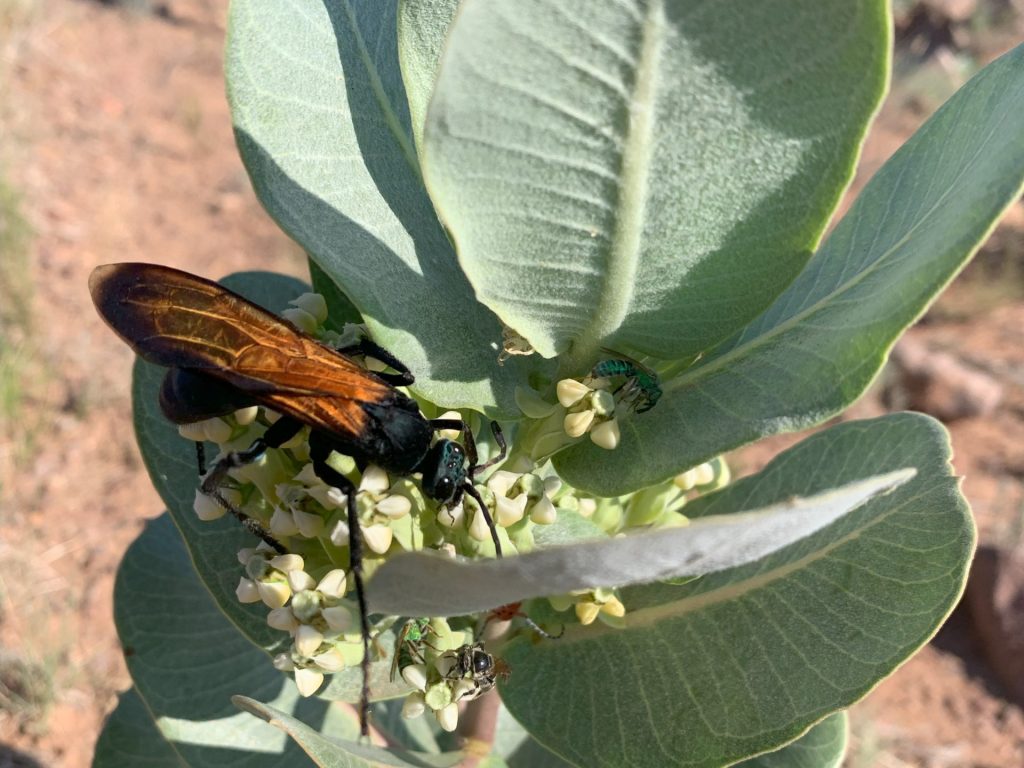
How many visitors can you spot on this broadleaf milkweed (Asclepias latifolia)?
Article and photos by Emily Rees, Restoration Ecologist – Institute for Applied Ecology
The Rio Grande is a lifeline running through the middle of New Mexico, much like an artery in a body. This corridor provides resources and habitat for plants and animals, as well as supporting human communities and cultures for centuries. As a major riparian network in the arid Southwest, it is a hotspot for pollinator species, with over 3,000 species documented. Due to the north-south alignment of the river, it also serves as a migratory pathway for beloved species like the monarch butterfly (Danaus plexippus) and migratory hummingbirds. However, the river and its wooded habitat (bosque) have been extensively altered by land use changes, use of herbicides and pesticides, flood management and introduced species.
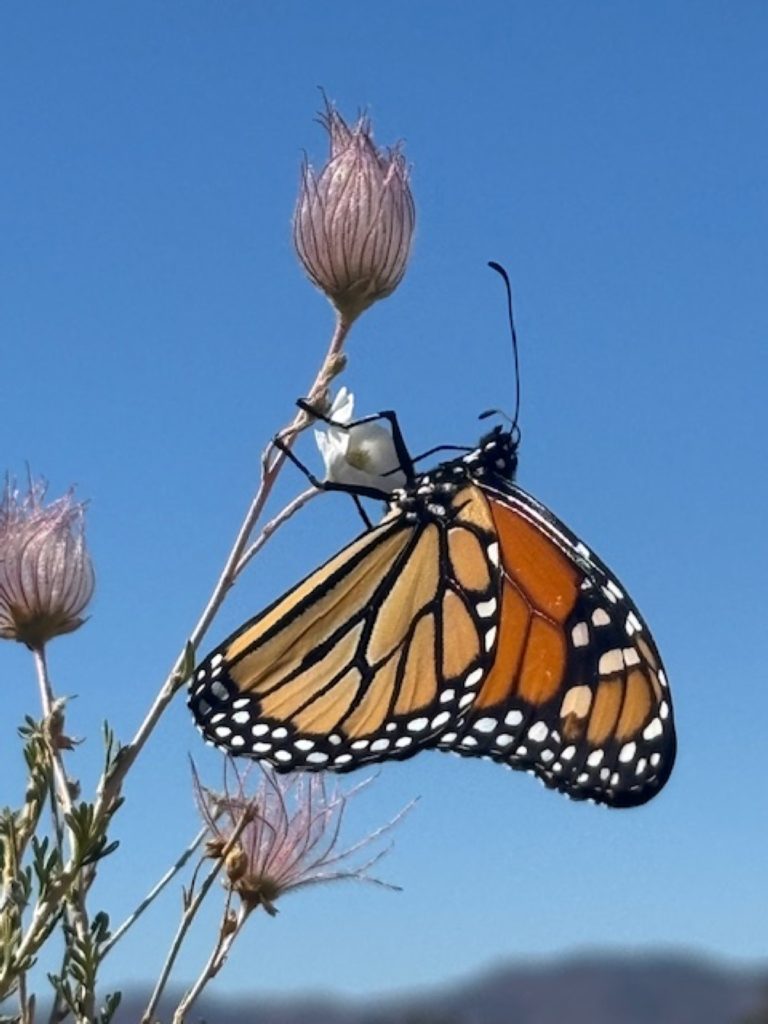
Monarch (Danaus plexippus) on an apache plume (Fallugia paradoxa) in S. New Mexico.
In 2023, the Institute for Applied Ecology (IAE) initiated a collaborative restoration project called “River for Monarchs” with the goal of creating sixteen stepping-stone habitat sites for monarch butterflies along the Rio Grande corridor and its major tributaries in New Mexico. These ‘stepping stones’ would span 200 river miles, starting north of Taos and ending at Bosque del Apache Wildlife Refuge. In the spring of 2024, in collaboration with the Friends of Bosque del Apache and U.S. Fish and Wildlife Service staff, 2,500 plugs and twelve pounds of seeds from wild-collected native plants were put into the ground at Bosque del Apache’s Observation Blind Trail on the North Tour Loop. Plant material included monarch host plant material, milkweed (Asclepias), and a diverse palette of native flowing plants in all shapes and sizes to entice and support pollinators across the three growing seasons.
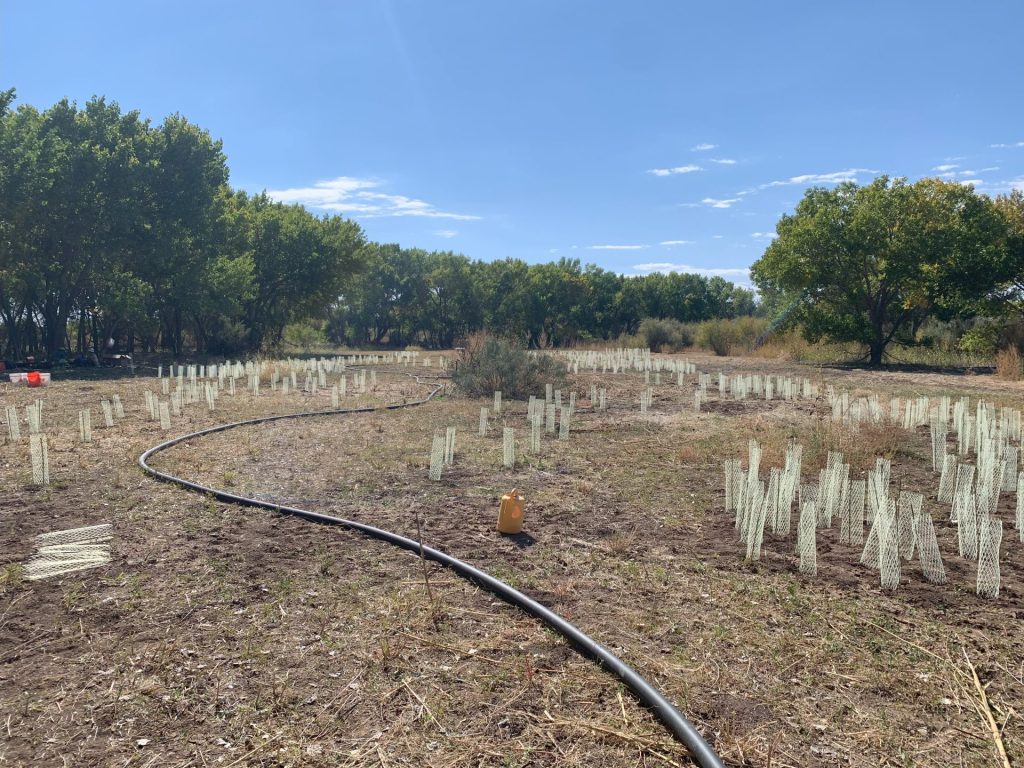
Vexar tubes protecting young plants at pollinator planting at Bosque del Apache.
As this project has grown and gained support, it was natural to expand the focal pollinator species and further diversify floral and habitat resources along this life-supporting river resource. To reflect these additional priority pollinator species, River for Monarchs has now evolved into River for Pollinators. IAE staff have spent the last year collecting seeds from flowering plant species that will expand the diversity of restoration material to include hummingbird pollinated species and nectar and host plant resources for nocturnal pollinators to support insectivore bat species.
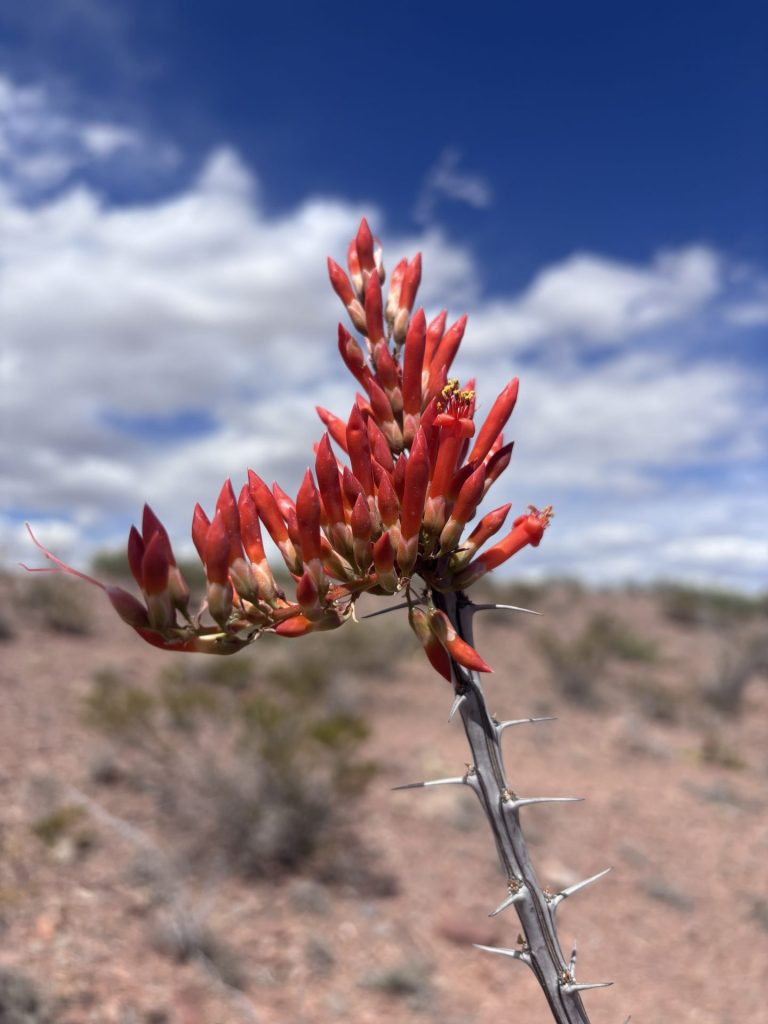
Ocotillo (Fouquieria splendens)
Plant species include ocotillo (Fouquieria splendens) – the desert torch pollinated by hummingbirds – and crimson sage (Salvia henryi) – a hummingbird favorite and moth host plant. These seeds are currently being grown in nurseries and will be outplanted at restoration sites this fall, including at Bosque del Apache!
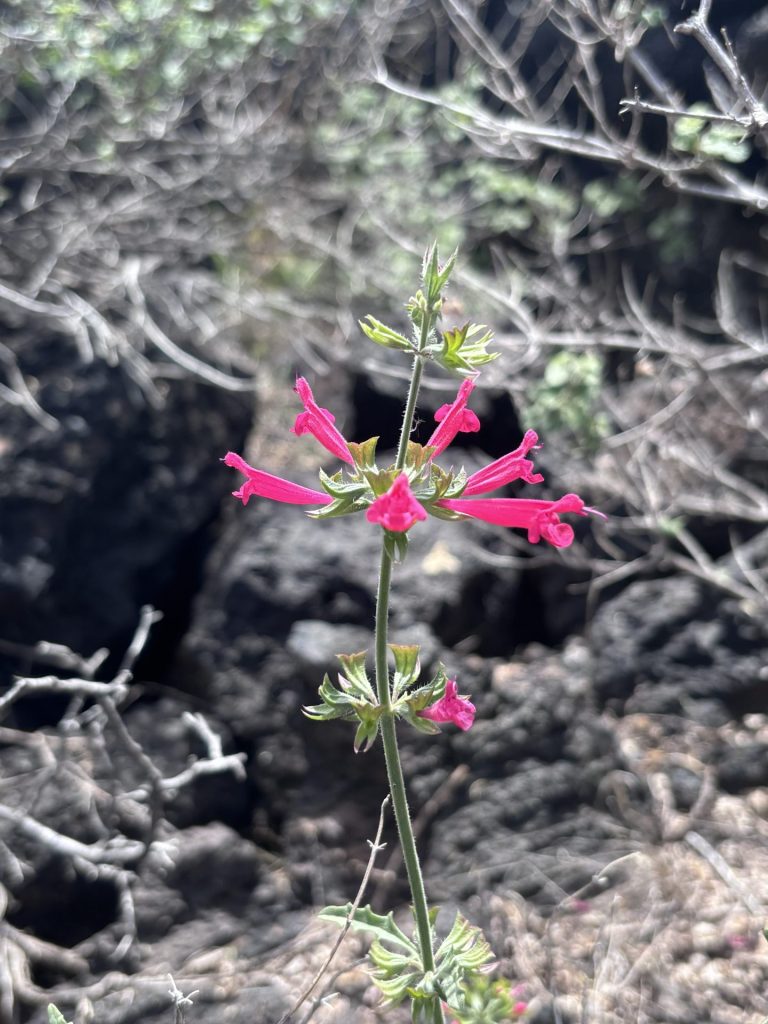
Crimson sage (Salvia henryi)
Alongside the physical restoration work, IAE is interested in capturing changes in the pollinator community through monitoring. In 2024 and 2025, bee houses were placed out at the Pollinator Habitat Enhancement Site, to offer habitat for mason and leafcutter bees and to measure presence of these groups of pollinators before and after adding new native plant material. These methods were not as cut and dry as one would hope, but did offer a unique window into the dynamics between bees, wasps, parasitoids, spiders and many other insects seeking shelter or a tasty snack. This year, you may notice taller monitoring structures along the pollinator pathway. We are conducting both visual monitoring for hummingbirds and acoustic monitoring for bats. Both of these methods will capture species presence at the site and perhaps some behavioral characteristics before plants are put in the ground later this fall.
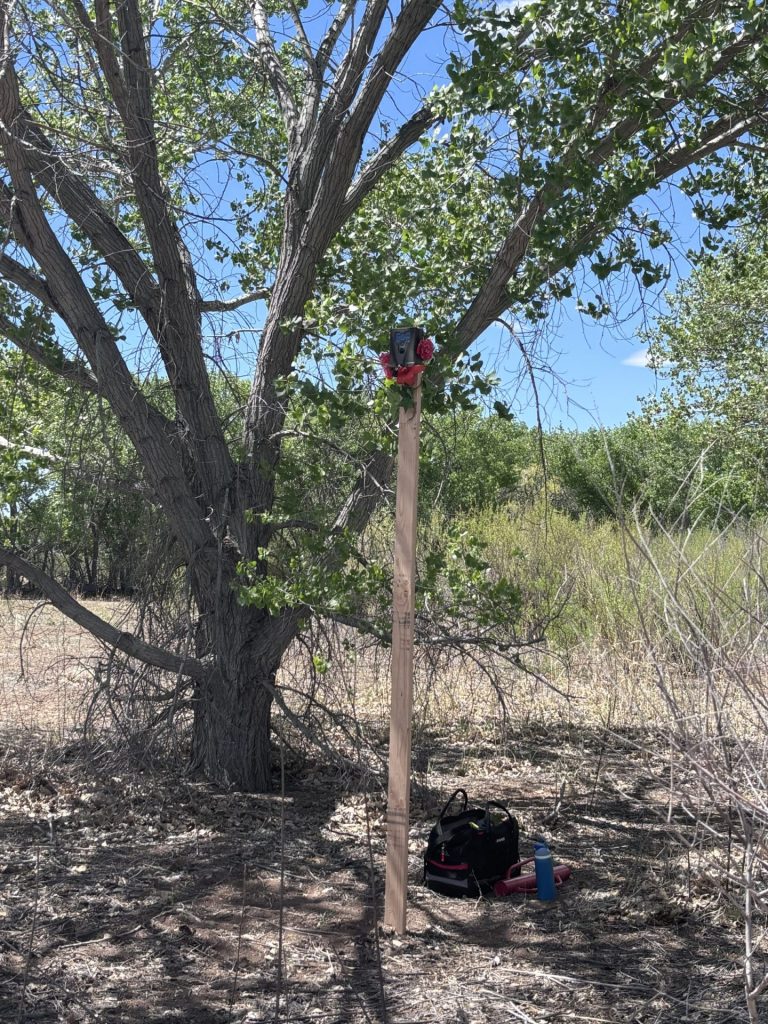
Hummingbird visual monitoring at Bosque del Apache.
As this project expands with other restoration efforts and native pollinator habitats in yards and towns increase, these stepping stones can grow into ecological corridors rebuilding connectivity along this vital river and habitat in our Land of Enchantment.
This project is funded through the Carroll Petrie Foundation and would not be possible without the support of numerous Federal, State, tribal and private partners, including United States Fish and Wildlife Services and Friends of Bosque del Apache.
For more information about the River for Pollinators, reach out the Emily Rees at emilyrees@appliedeco.org.