

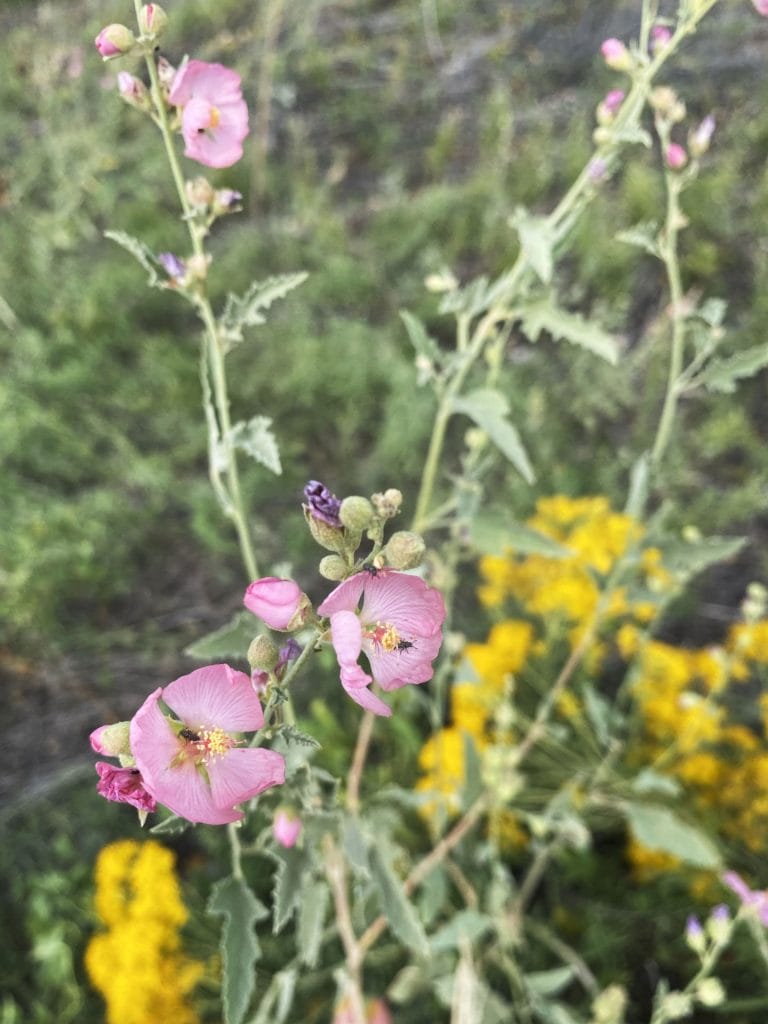
Aster, Monarch Butterfly and Pink Globe Mallow
What signals spring for you? Is it the longer days? Or the quieter skies, as our winter bird migrants start their journey to the north? Or perhaps it’s just that darn gale force wind that rattles the windows and shakes the trees. For me, it’s the plants. The cacti start to plump up, buds begin to form on trees and plants which looked fully dead suddenly appear green and alive. I’ve been waiting all winter for the revival at the Pollinator Habitat Enhancement site (the Observation Blind Trail) on the refuge.
In early October last year, fourty-nine volunteers planted 225 native flowering shrubs, trees, grasses and other plants. These included little-leaf sumac (Rhus microphylla), three-leaf sumac (Rhus trilobata), wolfberry (Lycium torreyi), chamisa (Ericameria nauseosa), banana yucca (Yuca baccata), beargrass (Nolina macrocarpa), giant sacaton (Sporobolus wrightii), broadleaf milkweed (Asclepias latifolia) and showy milkweed (Asclepias speciosa), among others.


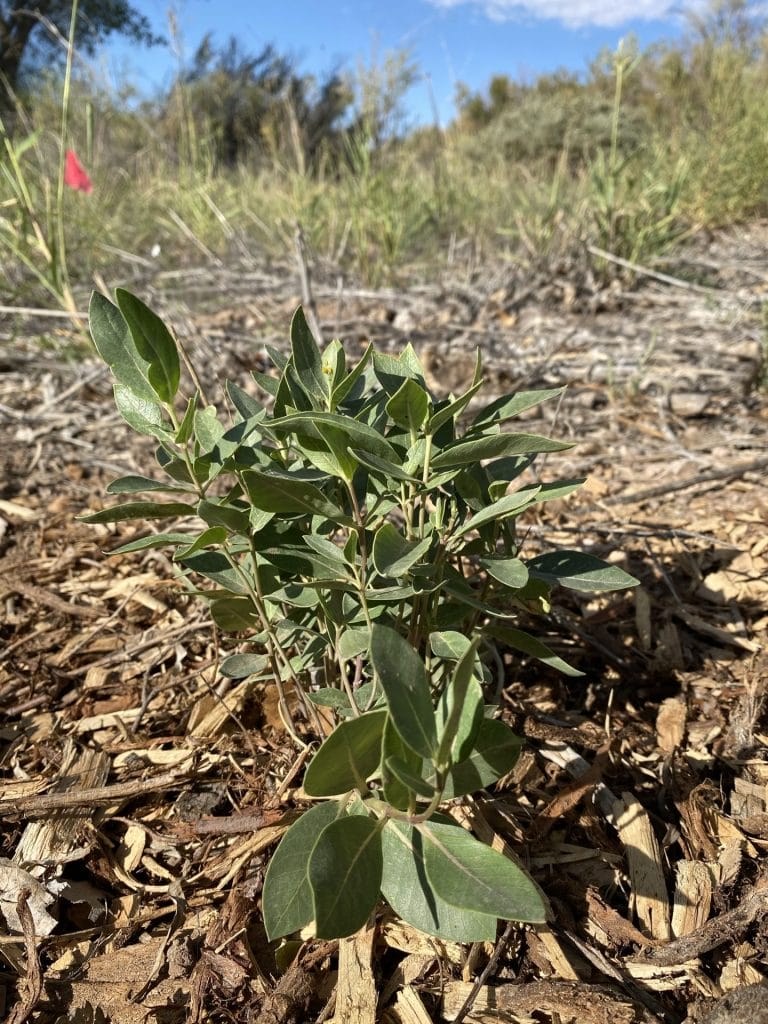
Planting Globe Mallow, Chamisa, Broadleaf Milkweed and Three Leaf Sumac

Volunteer efforts totaled 171 hours just for this initial planting! The plants chosen for the site are all native to Bosque del Apache and will provide flowers in all three “warm” seasons (spring, summer and fall). These flowers will ensure that pollinators have the resources they need to migrate, nest and reproduce.

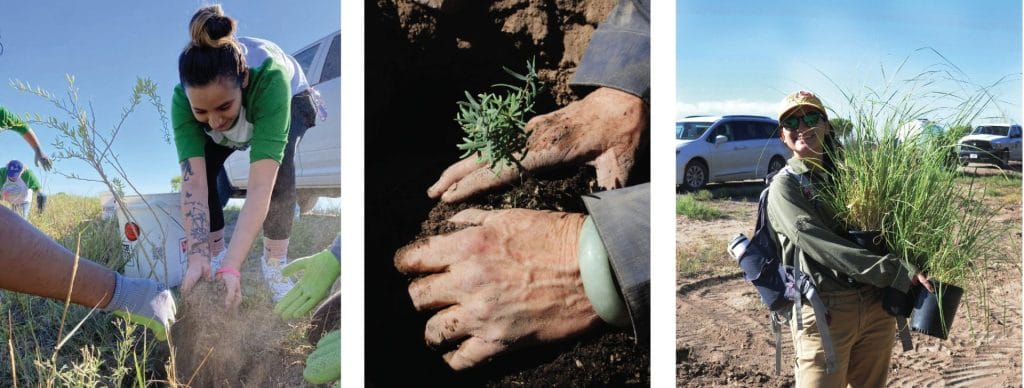
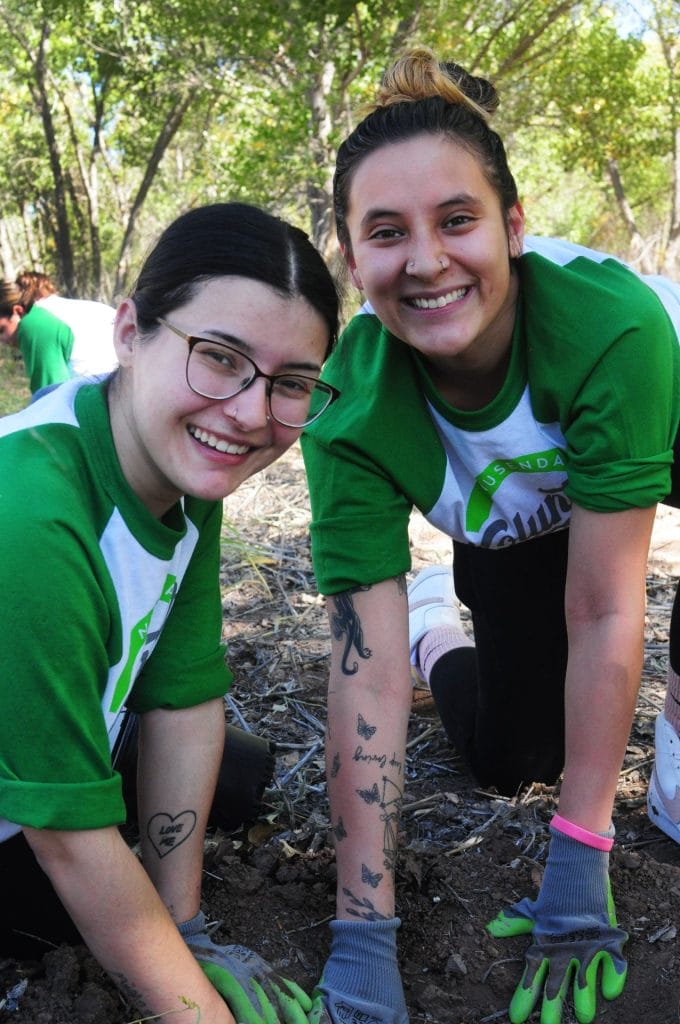
Volunteers, including Tyler Turk, Ecologist for The Institute for Applied Ecology and lead of their “River for Monarchs Project” (Right) plant various native
plants and grasses at Bosque del Apache’s Pollinator Habitat Enhancement Project site.
This spring we will complete phase two of the project. We will solarize about one acre of the site in preparation for planting wildflower seeds. Solarization is the process of stretching plastic sheeting over the ground and letting the bright New Mexico sun heat the soil over a period of around six weeks to kill any existing invasive plants. We have chosen this method to reduce or ideally eliminate chemical herbicide usage at the site. Pollinators are extremely sensitive to these chemicals, so we would like to avoid using them. The most notable invasive plant we are trying to eradicate is Johnsongrass. This grass spreads by underground rhizomes and can completely choke out other plants if left to its own devices.
After the solarization process is finished, we will be seeding the area with a multitude of native wildflowers and grasses. A few of the species we’ll be planting include blanket flower (Gaillardia pulchella), pale evening primrose (Oenothera pallida), upright prairie coneflower (Ratibida columnifera) and sideoats grama (Bouteloua curtipendula). Just like the fall planting, these flowers and grasses have been chosen because they are native to the area and will provide blooms at different times through the growing season. It’s very important to provide pollinators with the food sources they have evolved to eat. Exotic plants from other locations may not provide pollinators with the nutrients they need and at worst, may be an inaccessible food source. Desert plants and pollinators have co-evolved to support each other with flower structures and insect feeding structures fitting together like a lock and key. The most commonly known symbiotic pollinator/plant relationship is probably the Monarch butterfly and milkweed. The young caterpillars can only grow and thrive by eating the leaves of local ecotype milkweed plants. This upcoming fall, we will be planting an additional 2,500 seedlings of wildflowers and milkweed plants.


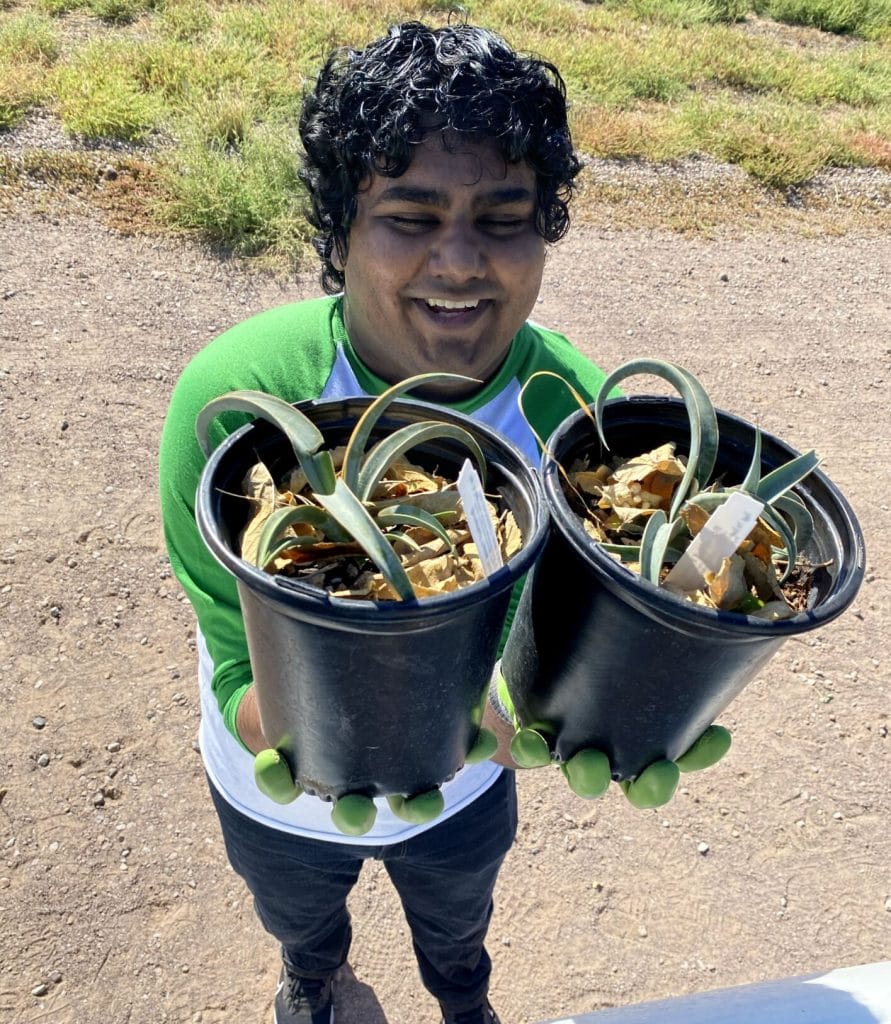
Volunteers plant various native plants and grasses at Bosque del Apache’s Pollinator Habitat Enhancement Project site.
In case you missed our previous article on the project, I’ll give a brief overview here. Friends is teaming up with refuge staff and the River for Monarchs project headed by the Institute for Applied Ecology to restore twelve acres of habitat in support of monarch butterflies and other native pollinators. Our goal is to increase and diversify native pollinator plant species present at the site currently known as the Observation Blind Trail on Bosque del Apache’s North Tour Loop. We will also install additional accessible trails and interpretive signage to educate visitors about the amazing interaction between pollinators and plants, as well as give access to the areas where pollinator enhancement is occurring. In addition to our partnership with the River for Monarchs, we were awarded a $58,000 Trails+ Grant from the New Mexico Economic Development Department’s Outdoor Recreation Division. The Trails+ grant program supports projects that enhance communities’ outdoor recreation opportunities – such as trails, river parks, wildlife viewing areas and more – and contribute to economic development, prosperity and wellness. This funding will allow us to build accessible trails and provide educational signage at the site.
We are doing most of this work with local volunteers and are looking for folks to help out with solarization set up on Saturday, March 30. If you would like to volunteer for this part of the project, get updates about future volunteer opportunities or just receive email communications about the project, please reach out to me at arboretum@friendsofbosquedelapache.org. You can also read more about the project at friendsofbosquedelapache.org/pollinator-project.
Keep blooming!
