
Article by Jonathan Manley, Friends of Bosque del Apache Board President
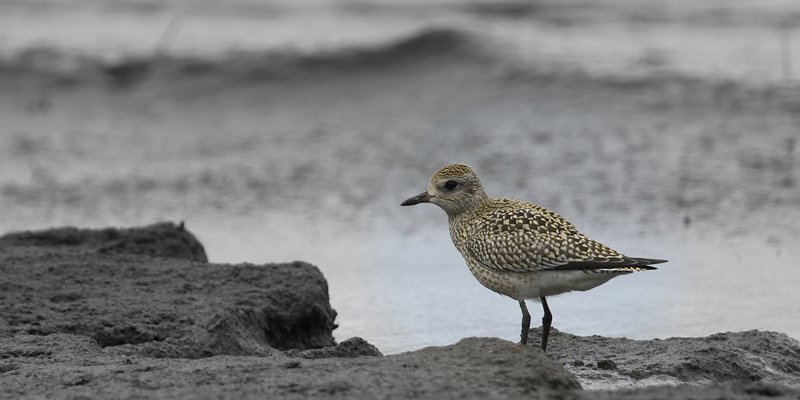
Black-bellied Plovers, rare but documented spring migrants at Bosque del Apache, are common shorebirds found on Panama’s coasts, beaches, and estuaries. | Photo by Tim Lenz, courtesy of Holbrook Travel, Inc.
When we think of Bosque del Apache’s flyway, we instinctively look Northwards to the breeding grounds of our winter flocks – geese, ducks and of course, “our” sandhill cranes. We even have the dates for their arrival and departure pretty much memorized – climate change permitting – “the cranes will be gone by Valentine’s Day….”
But we sometimes forget that, as our winter guests head North to breed, we have spring guests to our South who are getting ready to do the same thing, but with Bosque del Apache as their final or transitory destination. And we should care about these guys too because they are as much a part of our refuge as the winter visitors and – arguably – Bosque del Apache is even more important to them, because it determines the future of their species!
We should also care about the habitats that sustain them during our winter months and the places along their way North that provide them with safe passage. At the end of the day, it’s a single ecosystem, for we know that Nature cares little for geographic and political boundaries.
Many of our Spring visitors find a temporary home in Central America, and in particular, Panama. The size of South Carolina, and squeezed between Costa Rica and Colombia, Panama is bisected by the famous Canal bearing the same name.
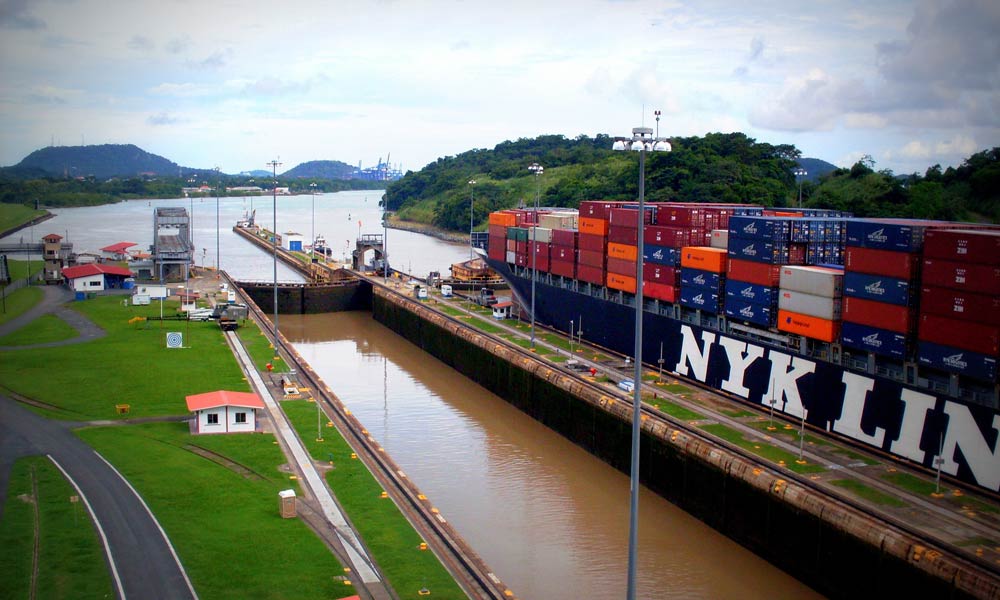
At its narrowest point, the Panama Canal is just 300 feet wide (approx.) – less than the length of an American football field! | Photo by Salvador C., courtesy of Holbrook Travel Inc.
I was fortunate enough to lead a birding trip to Panama in March this year, visiting a variety of habitats: the mudflats of the Bay of Panama, the cloud-forests in the Talamanca highlands in the west, and the lowlands around the Canal itself.
So what did we – and didn’t we – see?
The Bay of Panama faces south to the Pacific with the incongruous backdrop of Panama City’s high rises.
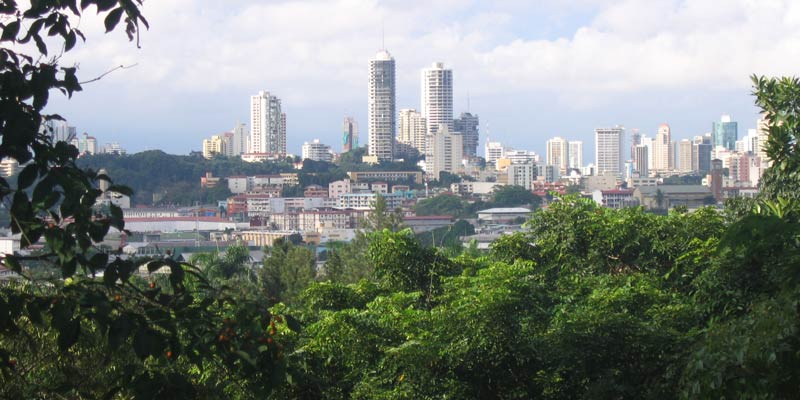
Panama City skyline | Photo by Steffi Lopez, courtesy of Holbrook Travel Inc.
In spite of the inauspicious location, this is a Ramsar-recognized wetland of International importance (although at low tide you’d be forgiven for wondering, “Why?”, as the birds are so far away). But, as the tide comes in, the shorebirds assemble in increasing numbers, squeezed in between the tidal water and the shoreline. Many of Bosque del Apache’s familiar spring visitors were there: spotted sandpipers, black-bellied plovers, black-necked stilts, short and long-billed dowitchers and Hudsonian whimbrel, to name but a few.

Long-billed Dowitcher at Bosque del Apache | Photo by John Olson
Further inland, more of “our” spring visitors were feeding up, getting ready for their long trek North, back to us. In particular, we saw the warblers (chestnut-sided, Tennessee and Blackburnian), the tanagers (summer and Western) and the biggest prize of all, the Painted Bunting (a “lifer” for many of us).

Western Tanager at Bosque del Apache | Photo by Alex Harper
While some anticipated species went unseen during the trip, I have high hopes to catch up with them in a few weeks time (and a little closer to home) during Friends of Bosque del Apache’s annual Spring Migration Celebration. We sure hope to see you there. I, for one, can’t wait!